

2019 / sculpture, raspberry pi, interactive digital speculative fiction
I was inspired to create a version of the illustration on the 1984 Byte Magazine cover by artist Robert Tinney of the red telephone that resembled the minitel (see fig. C1 1.2). I wanted participants to feel both nostalgic and slight dissonance with the interactive fiction they were listening to. The work was produced during a three-month artist residency at Stochastic Labs in Berkeley, California. I met with geneticists and bioethicists to discuss media depictions of science, in particular, CRISPR (gene editing technology). Press 1 posited various forms of data collection and was also influenced by my work experience in the pharmaceutical and biotechnology industry.

Figure CI 1.1: Press 1 to be Connected (2019), sculpture, multimedia, voice recordings

Figure CI 1.2: Cover of 1984 edition of BYTE Magazine with an illustration of the Videotex phone by Robert Tinney
The following screenshots show the choices a player must make to advance throughout Press 1 to be Connected. These are screens that appear on the sculptural component of the red phone.


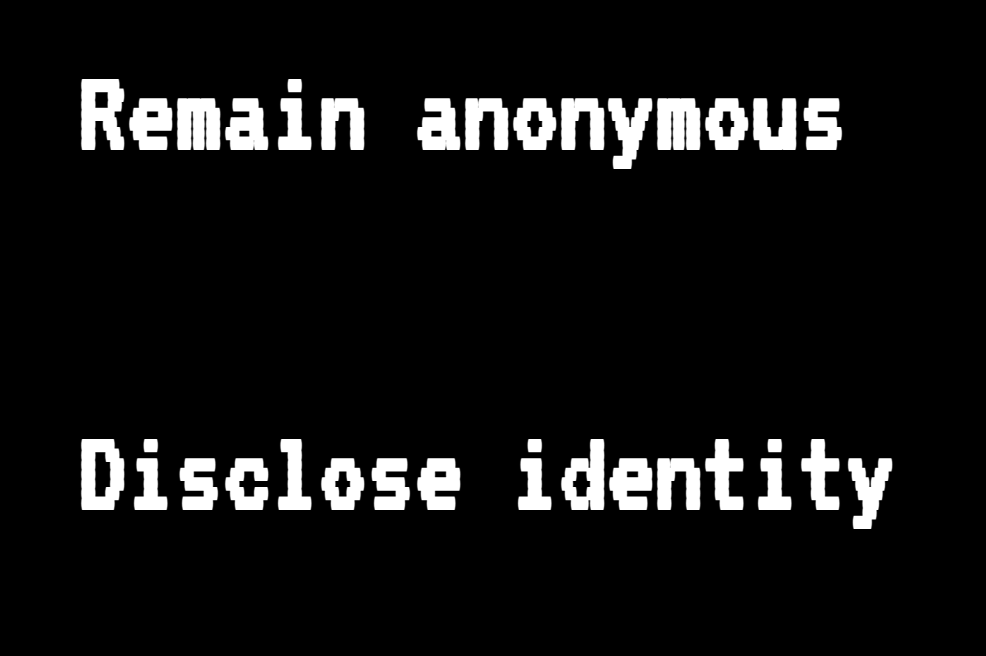


The interface was minimalist because I wanted to prioritize the storytelling. I made the decision to narrate the experience and put a filter in post production editing to give the illusion of my voice communicating through a telephone, which is the effect I wanted considering the sculpture component (phone) is of an era where the transmission of voice was not at its highest fidelity. Artists Alex Reben and Steve Thompson supported the hardware engineering to replace the touch tone buttons with a Raspberry Pi haptic screen. The first iteration of the project was a success and was shown in Linz, Austria at Ars Electronica in 2019.
 Dorothy R. Santos, Ph.D.