• A GIF with a background of a common Phase Alternating Line (PAL) test pattern with a shiba inu (dog) in the middle of the frame inside a circle with text above the dog's head that reads "YOU ARE THE SIGNAL."

    When I was pursuing my master’s degree, I was told by my thesis director that I’m a better orator than I am a writer.

    You can imagine the statement not only stung, but it made me wonder about my future as a writer and educator. I thought, “How could I teach people a craft that I couldn’t do well? Or worse, didn’t have the expertise and experience to guide and mentor students.” While I graduated from that program and went on to pursue a Ph.D. (that’s a story for another day), I did not let that reflection deter me. You can only become great at a craft through practice and not being precious about what you produce. Trying to convince my students that the “first draft” of anything is exactly that! Don’t hang onto it for too long because your thinking will evolve…if you’re really lucky, you will be transformed because the work with rearrange your mind and practice.

    Another thing that has been on my mind is “success.” Whether it’s landing your “dream” job (no such thing) or landing a book deal, I wish success wasn’t the boundary that people were working from. I know it’s saccharine and privileged for me to say that success isn’t about money. People need to eat, pay rent, and give care to loved ones and I understand what comes with responsibility. Yet, why can’t getting through the day be a success? How about reaching out to a friend that you haven’t spoken to in a long time? Or, how about trying something new? As a friend and colleague reminded me in a conversation, being in academia is highly evaluative. Yes, every job has some kind of review for performance. But in academia, you are constantly having to write, research, and/or make something to prove you are worthy of reappointment, a merit increase, and/or a promotion (tenure!). Being an academic in the Arts is a constant struggle and tension with “Sure, I did this and that, but is this good enough to get me to next year?” How do I stay hopeful and optimistic with and for my students? I do it, but some days, it’s a struggle with everything happening in the world.

    Do I practice what I teach? I try.

    With my second official year as full time faculty member, I’m realizing I need to have a consistent form of a digital presence. Back in January 2022, as I was writing my dissertation, my Instagram account got hacked. I took the incident as a sign to stay off social media until I’m done writing (the writing never ends!). It’s now 2026 and I am making a slow and gradual return. I decided to get back into posting to my website after being relatively inactive (and horrible about updating it). Inspired by artist Darius Kazemi’s (sat on a panel with him years ago for Theorizing the Web) Run Your Own Social and Erin Kissane’s studio practice, I want to do things my way on the internet as opposed to contributing to larger digital platforms and ecosystems. I want to return to my little corner of the internet where folks might stick around for awhile and learn something new. I’ve been working on something super special (for myself and much needed upgrade to my life) with an incredible and extraordinary team (including my partner and collaborator, Abram Stern, Ph.D.). More soon! Until then…
    ¶¶¶¶¶

    ¶¶¶¶¶

    ¶¶¶¶¶

    ¶¶¶¶¶

    ¶¶¶¶¶

  • I have not been the best at updating my website. So much has happened (great things and some not so wonderful things) since my last entry. I am finally getting a handle on my digital presence (what does that even mean these days?!) because I’m starting a special project with incredible, talented, and gifted people who have agreed to work on helping me re-design and re-envision my new digital home – my website!

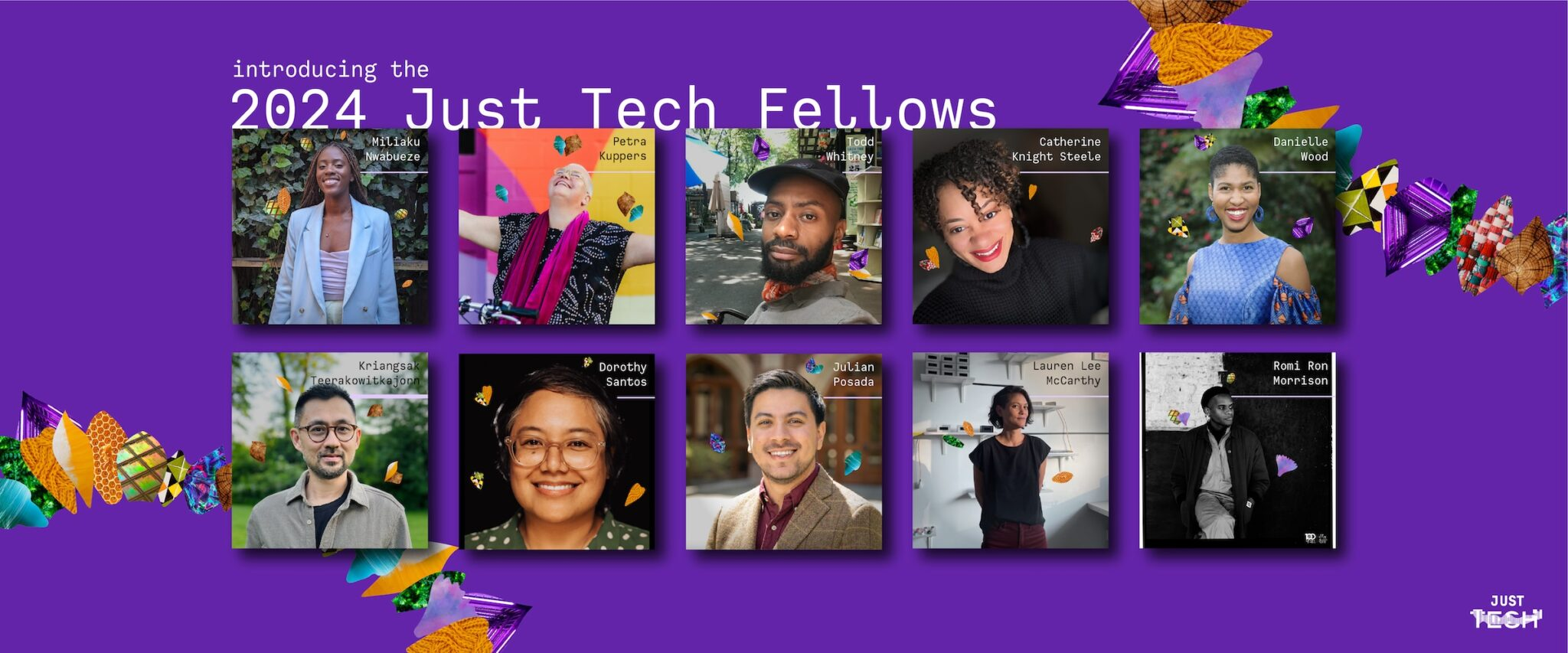
    In the mean time, I will probably try and get into the groove of posting updates more regularly on this site until the end of this year. For now, as the post title suggests, I was awarded a Just Tech Fellowship for 2024-2026! I have, officially, completed Year 1 and entering the second year. My project is titled Infrastructure of Feeling (the title and work inspired by Dr. Elizabeth Ellcessor’s work on emergency infrastructures and crisis management). I’m working on: 1) building a multi-media archive, 2) interactive syllabus (for educators in the arts, humanities, and social sciences and the general public interested in access to educational materials), and 3) artistic, creative interventions based on my field and scholarly research.

    It has been such an illuminating experience and I have loved the “whole person” support I have received from the Social Science Research Council (SSRC). It’s been such an amazing experience to get to know other fellows and we span many fields of inquiry and study including visual and performing arts, communications, engineering, activism, and more.

    You can learn more about the 2024-2026 Just Tech Fellows cohort by clicking here.

  • Fortunate to be included in this epic anthology. I had the opportunity to write an essay about artist Chelsea Thompto’s work Landmarks for the book. Many brilliant artists and writers in this collection! More information below.

    “Edited by David Evans FrantzChristina Linden, and Chris E. Vargas

    A compelling exploration of trans art, activism, and resistance.

    Spanning over four centuries, this volume brings together a wide-ranging selection of artworks and artifacts that highlight the under-recognized histories of trans and gender-nonconforming communities. Through the contributions of artists, writers, poets, activists, and scholars, this title reflects on historical erasure and imagines trans futures.

    An expansive array of objects chart not a patriarchal history but a gender-neutral, trans-centric hirstory. The first publication of its kind, this survey celebrates trans forebearers, highlights struggles and triumphs, and reflects on the legacies of trans creative expression. Contributions by Kate Bornstein, Ria Brodell, Vaginal Davis, Leah DeVun, Mo B. Dick, Zackary Drucker, David Getsy, Martine Gutierrez, Andrea Jenkins, Jade Guarano Kuriki-Olivo (Puppies Puppies), Thomas (T.) Jean Lax, Abram J. Lewis, Miguel A. López, Amos Mac, Cyle Metzger, Deborah A. Miranda, Morgan M Page, SA Smythe, C. Riley Snorton, Dean Spade, Sandy Stone, Jeannine Tang, Michelle Tea, McKenzie Wark, and many others probe new horizons where institutional critique and trans culture meet. This book is copublished by the Museum of Trans Hirstory & Art (MOTHA), a conceptual art project of artist Chris E. Vargas that is forever “under construction” by design to allow continual transformation.”

    The University of Chicago Press

    To purchase the book, please visit The University of Chicago Press

    ¶¶¶¶¶

    ¶¶¶¶¶

    ¶¶¶¶¶

    ¶¶¶¶¶

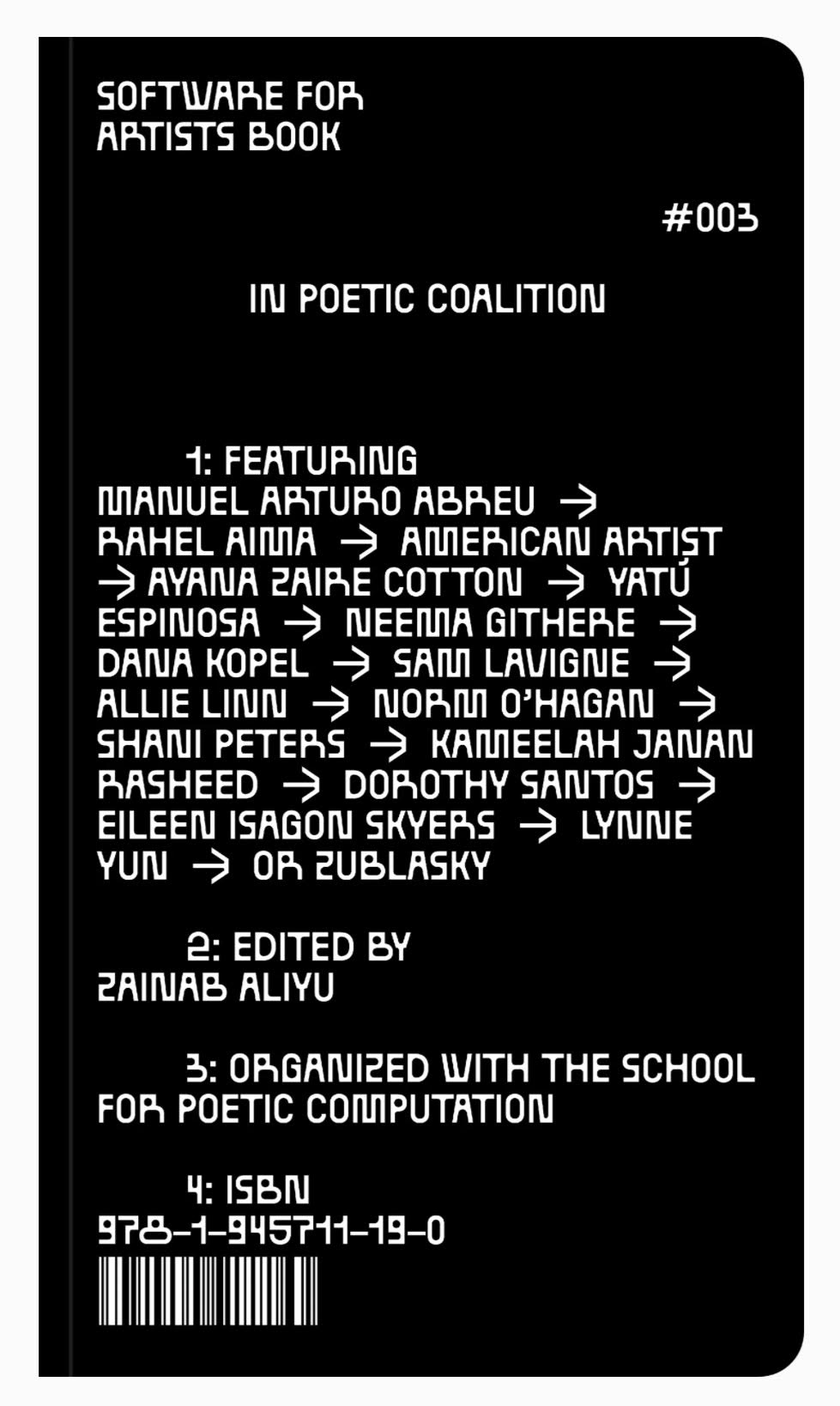
  • “This publication is a coalition — it brings together experiences of combined action. With a focus on labor organizing within the arts and tech industries, In Poetic Coalition explores the potential of creating alternative networks of education and challenging the material conditions that prevent us from enacting new realities with dignity and security. When we defy existing models for institution-building, what possibilities for gathering can materialize and what kinds of learning and unlearning can we practice together? Released alongside Pioneer Works’ eighth Software for Artists Day and the School for Poetic Computation’s 10th anniversary in November 2023, we invited educators, labor organizers and artists exploring experimental learning initiatives to be in solidarity and conversation with each other. Through coalition, we can build the worlds that we know to be possible.”

    Pioneer Works

    To purchase the book, please visit Pioneer Works

    ¶¶¶¶¶

    ¶¶¶¶¶

    ¶¶¶¶¶

    ¶¶¶¶¶

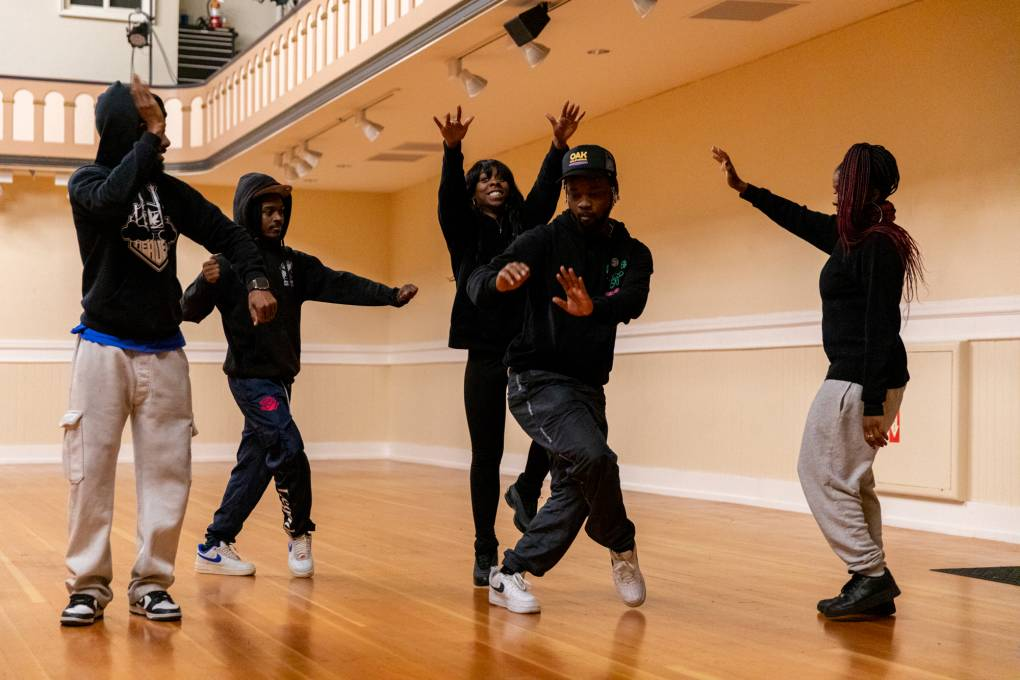
  • Gary ‘Ice Cold 3000’ Morgan (center) dances with Mud Water Theatre members during rehearsal for ‘Mud Water IV’ at the Bayview Opera House. Created by My-Linh Le, the dance theatre piece will premiere at Dance Mission Theater on Nov. 18.  (Juliana Yamada/KQED)

    I had the pleasure of interviewing artist, dancer, and choreographer My-Linh Le about her latest production, Mud Water IV premiering at Dance Mission Theater.

    You can read the article published to KQED Art & Culture section here.

    ¶¶¶¶¶

    ¶¶¶¶¶

    ¶¶¶¶¶

    ¶¶¶¶¶

  • It’s alive! I, truly, have no idea how I was able to pull this massive feat of research, writing, and editing off considering the challenges that arose over the past few years. But it’s here and I can honestly say it scratches the surface and feels like the beginning. It’s definitely the close of one chapter in my life (no pun intended) and a door opening into the next major endeavor that is my artistic and academic career.

    Please feel free to view my dissertation here and reach out with any questions here.

    ¶¶¶¶¶

    ¶¶¶¶¶

    ¶¶¶¶¶

    ¶¶¶¶¶

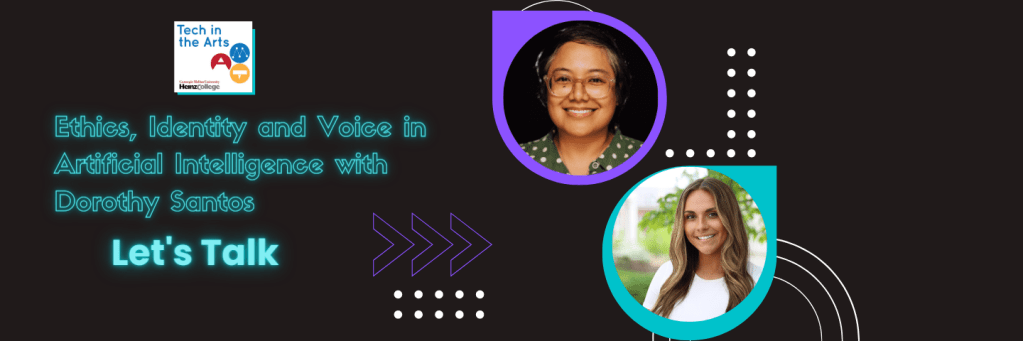
  • During my artist residency at Carnegie Mellon University’s Frank-Ratchye STUDIO For Creative Inquiry (March 2023), I joined AMT Lab staff member Samantha Sonnet as a part of their Let’s Talk podcast series. We talked about the future of AI, identity, tech and culture, tarot reading, and more. It was a delightful conversation and I was incredibly impressed with Samantha and the rest of the production team.

    You can find Part I and II of our conversation by clicking here along with the auto-generated transcripts.

    ¶¶¶¶¶

    ¶¶¶¶¶

    ¶¶¶¶¶

    ¶¶¶¶¶

  • Humbled and honored to be a part of a special series on Sounding Out guest edited by one of my mentors, Johann Diedrick. Please read Professor Jennifer Lynn Stoever’s statement of the series below.

    In summer 2021, sound artist, engineer, musician, and educator Johann Diedrick convened a panel at the intersection of racial bias, listening, and AI technology at Pioneerworks in Brooklyn, NY. Diedrick, 2021 Mozilla Creative Media award recipient and creator of such works as Dark Matters, is currently working on identifying the origins of racial bias in voice interface systems. Dark Matters, according to Squeaky Wheel, “exposes the absence of Black speech in the datasets used to train voice interface systems in consumer artificial intelligence products such as Alexa and Siri. Utilizing 3D modeling, sound, and storytelling, the project challenges our communities to grapple with racism and inequity through speech and the spoken word, and how AI systems underserve Black communities.” And now, he’s working with SO! as guest editor for this series (along with ed-in-chief JS!). It kicked off with Amina Abbas-Nazari’s post, helping us to understand how Speech AI systems operate from a very limiting set of assumptions about the human voice. Then, Golden Owens took a deep historical dive into the racialized sound of servitude in America and how this impacts Intelligent Virtual Assistants. Last week, Michelle Pfeifer explored how some nations are attempting to draw sonic borders, despite the fact that voices are not passports. Today, Dorothy R. Santos wraps up the series with a meditation on what we lose due to the intensified surveilling, tracking, and modulation of our voices. [To read the full series, click here–JS

    Link to The Cyborg’s Prosody, or Speech AI and the Displacement of Feeling

  • Image description: A bright green flyer with xerox looking images in the background overlaid by black typography that reads Cyberfeminism Index in all capital letters. Below this text reads Mindy Seu in conversation with Dorothy Santos, A.M. Darke, Cesia Domínguez López, and Anika Sarin.

    cyberfeminism? by Mindy Seu (excerpt)

    “Cyberfeminism cannot be reduced to women and technology. Nor is it about the diffusion of feminism through technology. Combining cyber and feminism was meant as an oxymoron or provocation, a critique of the cyberbabes and fembots that stocked the sci-fi landscapes of the 1980s. The term is self-reflexive: technology is not only the subject of cyberfeminism, but its means of transmission. It’s all about feedback.

    Rooted as it is by feminismcyberfeminism is an imperfect umbrella term. The history of feminism is dominated by Western attitudes, which makes it complicated and exclusionary. The reason I have chosen to use the term is because the combination of ‘cyber’ and ‘feminism’ allows novices to quickly connote its meaning and speaks to its lineage and evolution. This includes branches like Cyberfeminism 2.0 (378), black cyberfeminism (475), xenofeminism (643), post-cyber feminism (573), glitch feminism (782), Afrofuturism (19), and hackfeministas [page “Manifiesto por Algoritmias HackFeministas” not found], transhackfeminism, 넷페미 (netfemi) [page “Korean Netfemis: Learned Woman, Yeoshi, Feminachi, Megal… Netfemi Sunansa (대한민국 넷페미사: 배운여자 여시 페미나치 메갈… 넷페미 수난사)” not found], 女权之声 (feminist voices) [page “Feminist Voices 女权之声” not found], among others.

    The term is self-reflexive: technology is not only the subject of cyberfeminism, but its means of transmission. It’s all about feedback.

    Mindy Seu, Cyberfeminism Index

    When I began building this index, Judy Malloy (254) recommended that I distinguish between YACK or HACK, theory versus practice respectively. YACK was collected by reading. HACK was collected through conversations with generous people who told me their stories and referred me to others (see below for these contributors). I learned of hackerspaces [page “Legacies of craft and the centrality of failure in a mother-operated hackerspace” not found], digital rights activist groups [page “Colnodo: Uso estratégico de Internet para el desarrollo” not found], DIWO organizations (616), DIY teledildonics manuals [page “buttplug.io” not found], bio-hacktivists (452), data dominatrixes (577), and open source estrogen pioneers [page “Sex Hormones, Biopower and Biopolitics, Endocrine Disruption, Estrogens, Biohacking” not found].

    The majority of references I received and read drew from a Western context. This may have been due to the limits of English, but it may also have been the relatively late adoption of the internet and varying forms of feminism outside the West. It may have also been the difference in terminology and search queries, as many included here do not self-identify as cyberfeminist. The voids in this index should not suggest that non-Western cyberfeminism does not exist. They merely reveal the inherent constraints of my Western vantage.”

    Read more of Mindy’s words and learn more about the index here

    Link to Cyberfeminism Index book tour here

    ¶¶¶¶¶

    ¶¶¶¶¶

    ¶¶¶¶¶

    ¶¶¶¶¶

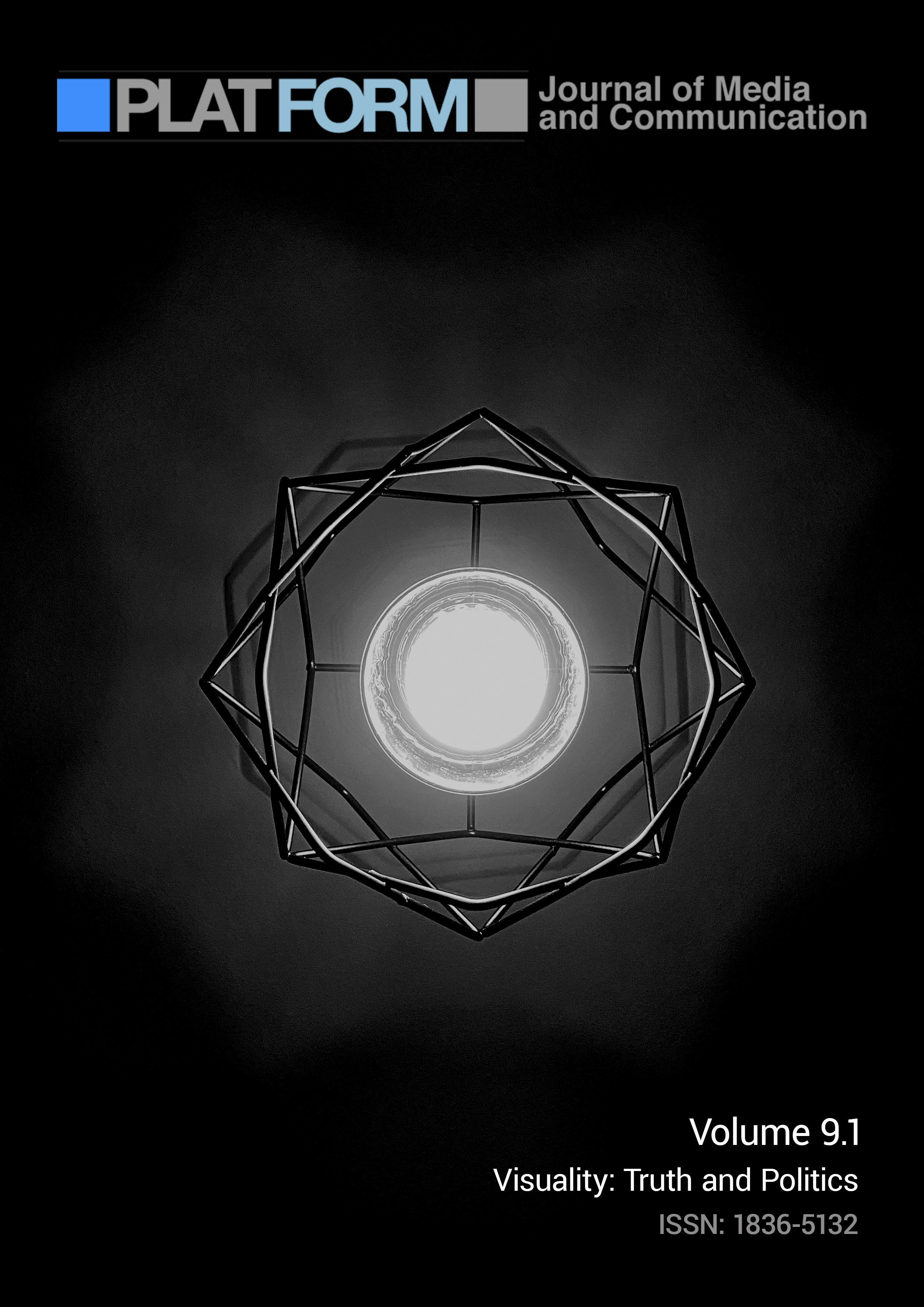
  • Image description: Platform: Journal of Media and Communication in large text a the top of a black cover of the Visuality: Truth and Politics issue. Volume 9.1 Visuality: Truth and Politics appears in white sans serif text at the bottom right hand corner. The middle of the cover, there is a depiction of an orb surrounded by a geometric wireframe.

    Abstract

    In this essay, I explore what Gray (2015) calls “the excesses of representation” that reproduce race and gender across proliferating digital platforms. I traverse the digital in tracking and tracing viral inequality, data surveillance, and moderation. Does the term “social media,” as a redundant term, accurately describe the processes of algorithmic amplification by which representational excesses get diffused and made legible? That is to say, do “social media” constitute formative spaces that produce social affect, or do they constitute transparent spaces that mediate affect? This entails addressing how digital socialization of amplified racial and gendered performances occupies a different ethical ground than the ostensibly neutral ethics that mediatization might claim. The claim of media neutrality therefore makes room for the “excessive” reproduction of “objective” racial and gendered caste categories that allow for possible objections to taking responsibility for the global restructuring of social affect. This article addresses these questions, with a particular focus on how and why large social media companies claim the social as platforms not as publishers while denying their de facto identities as Fifth Estate media institutions subsuming and eclipsing Fourth Estate Power.


    I situate engagement with Herman Gray and Sarah T. Roberts’s texts to interrogate ideas of transparency, moderation, and digital subjectivity, and their much-deserved denouements, to examine whether the mediated spaces of social media constitute transparent, objective sites for communicating social affect, or in fact actively produce reproduce social affect. Ultimately, I argue that the excesses of representation show the latter to be true: social media are not transparent spaces, but actively reproduce social affect. Despite premature declarations heralding their respective epochal demises, history, race, and truth remain contested sites of durable significance.


    Keywords:
    Media, social media, digital culture

    Access the article here.

    ¶¶¶¶¶

    ¶¶¶¶¶

    ¶¶¶¶¶

    ¶¶¶¶¶