• What if you could physically see and identify a person’s emotions through visible biofeedback? Or gauge a potential mate’s interest? How many times have you wanted to know what someone else was feeling? Growing up, it’s common to wonder what any of us might do with extra-sensory perception or abilities. Although there is no way to implant programs and download directly into our bodies or hardwire our brains (yet), creative technologists are constantly finding ways to work with how we learn and engage through game play. Aside from language, one of the defining features of human nature is the ability to express emotions and feelings. Whether it’s through our facial expressions to the tone and pitch of our voices, advancements in technology allow us to figure out ways to learn more about human interaction. Sensoree’s Galvanic Extimacy Responder (GER) may provide fascinating answers to many of the aforementioned questions. GER designer, Kristin Neidlinger, created a soft wearable device reflecting the mood of the wearer. Although taking the intimacy of emotions and offering up a tangible and experiential connection to others might seem playful and whimsical, it speaks to the human desire of connection. The Sensoree website provides a simple yet robust description of the GER,“The high collar, bowl positioned with LEDs reflects onto the self for instant biofeedback and acts as a tele-display or external blush for the other”.

    Last Sunday, a group of eager game testers gathered at the SOMArts Cultural Center in San Francisco. Armed with anticipation, the testers included game designers, ZERO1 art ambassadors, developers, engineers, art patrons, avid gamers, artists, and creative technologists. The diverse range of participants resulted in a wide array of feedback for the Sensoree design team. With an affinity towards anything psychologically based, I opted to test Sensoree’s GER, which is defined specifically as the “sensor that detects excitement levels and translates mood into a palette of affective colors”. The game participants wore a large soft fabric ring that resembled a cowl neck scarf. The GER fabric was translucent enough to display soft colors with a corresponding emotion:

    • Green = Zen | Peaceful | Placid
    • Blue = Calm | Relaxed | Focused
    • Purple = Inspired | Alert | Perked
    • Pink = Excited | Aroused | Eager
    • Red = Nervous | Delirious | In Love
    • White = Nirvana | Bliss | Transcendent

    Variations of game play included teams of approximately four individuals deciding on a particular emotion and eliciting that particular emotion for the team mate wearing the GER. At first, one of my teammates tried to make my scarf a steady red. Not so surprisingly, he asked me to imagine a very angry editor wanting changes to a work that took me quite some time to finish. Yes, it went straight to red. For the team challenge, I wore the GER and my teammates instructed me to close my eyes and imagine overtly serene landscapes (i.e., babbling brook, a quiet mountain side, etc.) while encouraging me to focus on my breath. Hoping this would translate into green lit GER, it took my team about ten minutes to have the GER emanate green and consistently keep me in a ‘zen, peaceful, and placid’ state. Yet, the GER works differently for each person. For SOMArts Gallery Director and Curator Justin Hoover, the GER was constantly lit at Blue with very seldom color changes. Later, the group learned he studied Martial Arts! Not too entirely sure what that says about me or my sweat glands other than I probably need to meditate a bit more to control my emotions! Either way, Sensoree’s GER had the entire group of testers discussing the overall design and objective of the GER, which seemed to provide Neidlinger and her team some useful information on how the GER might perform within a larger audience.

    On our daily commutes, we see faces turned downward to phones and headphones or ear buds blocking out the sounds of the environment. Therein lies the conundrum of how we interact and evolve alongside rapidly changing technology. In looking at the intersections of art and technology, ZERO1’s biennial theme ‘Seeking Silicon Valley’ aims to showcase innovation emerging far beyond the physical region as well as deepen our understanding of cultures and sub-cultures on a global scale. Although the Galvanic Extimacy Responder (GER) may be based in technology, it necessitates and reminds us that human interaction is the catalyst for connection in our search for the meaning and understanding of Silicon Valley.

    Originally posted to ZERO1, please view here

  • Advancements in technology are transforming music into an incredibly interactive experience for the listener. It’s not only about listening, but bringing a level of tangibility to sound and audio. The increasing use of smartphones, tablets, and other mobile devices is providing a new way to learn and engage with the world, and artists, musicians, and creative technologists are now developing methods to involve the user in creating their own unique experience.

    For instance, the way we read has changed drastically. American publishing house McSweeney’s incorporated icons for interactive artworks into their mobile applications as a way for the reader to engage with the material while providing exposure to new media artists. Within the music industry, we see the same innovation but with much more interactivity in mind. As touch screen technology becomes increasingly prevalent in how we obtain information, creatives must grapple with how the technology affects our individual and collective experiences. From the internet to mobile devices, music is one of the first commodities that concerns the user. It is no longer an auditory escape but a multi-sensory experience, which forces artists and musicians to look at music production in radically different ways.

    Upcoming GAFFTA course, Music and Mobile Computing for iOS, taught by instructors Spencer Salazar and Mark Cerqueira, will not only assist developers in learning new skills but will help shape nascent ideas into potentially sustainable projects. Despite Salazar’s busy schedule, he was able to answer questions regarding the field of mobile computing, how the course came to fruition, and where he believes the field is headed. He also shared some projects currently in the works at Smule.

    Q & A with Music and Mobile Computing for iOS Instructor Spencer Salazar

    Dorothy Santos (DS)Can you provide some background on processing and design in iOS as a creative tool? In layman’s terms, how would you describe music and mobile computing in iOS? How is it used and by whom, typically?

    Spencer Salazar (SS): The explosive popularity of smartphones in the past 5 years has led to a proliferation of small computers in apparently everyone’s pocket or purse, each persistently connected to the internet, aware of its geographic location and spatial orientation, always-on, and capable of extensive audio/visual processing. There are many similarities between traditional desktop computing and the new mobile model; our course explores how the distinguishing qualities of mobile computing can be leveraged for new/interesting musical experiences, using iOS as the specific programming environment for this exploration.

    Mark and I both come from Smule, where these technologies power apps like Ocarina, a combination of instrument, music education tool, and social-music experience. I’m a PhD student at CCRMA (Stanford’s Computer Music department), where groups like the Mobile Phone Orchestra (“MoPhO”) use iOS to realize musical compositions in a performance context. Beyond that, forward thinking musicians such as Björk and Brian Eno have embraced mobile technologies, the former releasing her latest album in the form of an iPad application. So, in our experience there’s a combination of software developers and musicians who see a lot of value in these tools.

    DSWhat do you hope students will get out of the course?

    SS: The curriculum is about 50/50 audio and physical interaction. The focus is partially on what kind of musical experiences make sense given the hardware interface and how to implement in a way that will actually work reasonably well with limited computing resources. We hope students will produce some sort of interesting app/experience/instrument for their iPhone or iPad. After 2 weeks it’s more likely this will be in proof-of-concept form rather than something ready to ship to the App Store, but from there, we also hope that they will have the tools to further develop that app and create new ones.

    DSWhere do you see this subject matter or field going?

    SS: Hmm, its a tough question because we’ve really just scratched the surface of what is possible with the current way of thinking about it. But we think there will be a lot more software that really takes advantage of location-awareness, the physicality of the device itself, and the degree to which one’s phone is part of one’s identity.

    From a software engineering perspective, there is a lot of room for growth. At the moment, to put together a solid network-enabled app you need to have a handle on at least three different programming frameworks. In an ideal world you would only need one, so that’s a pretty glaring deficiency in the toolset.

    DSWhat’s the most exciting thing you’ve seen done with these tools?

    SS: I’m not sure what the *most* exciting thing is but its pretty cool to see mainstream artists like Björk embracing this type of technology (e.g. Biophilia). It’s also cool to see things like this:

    I don’t watch Glee or even have TV, but here 3000 complete strangers from around the world are singing together (in support of those hit by the Japanese tsunami in 2011). This is something that just wasn’t possible until very recently, thanks to mobile audio technology.

    DSWhat new projects are you working on?

    SS: I’m working on a mobile application where users can leave audio “traces” throughout their world, and other people can tune in to the traces that have been left around them. I’m also trying to develop that “1 framework” I mentioned above.

    Originally posted to the GAFFTA blog, which can be found here

    ¶¶¶¶¶

    ¶¶¶¶¶

    ¶¶¶¶¶

    ¶¶¶¶¶

    ¶¶¶¶¶

  • Seventy two hours overlooking the San Francisco cityscape in a mansion atop Twin Peaks sounds like a pretty nice getaway, doesn’t it? For the artists and creative professionals last weekend at The Glint it wasn’t very much time to create a mobile application for the 2012 ZERO1 Biennial. But the groups pulled through with some amazing ideas and a network of new friends and potential colleagues. Hackflux participant, web developer, Anna Billstrom, remarked that it was,

    “…nice being in a personal space. From the very beginning, from the first pitch, I talked honestly about what inspires me and even when ideas did not make sense, people went along with the them”.

    Nika Jones, Cloud Computing and Web Developer shared a similar sentiment,

    “I had the chance to collaborate with back-end designers, artists, and developers. It was an interesting space. It helped to bring out a lot of creativity and ideas. The people I’ve met here are people I would want to stay in touch with.”

    Danielle Siembieda, ZERO1’s Community Engagement Manager, opened up the final day of the hackathon by introducing jury members and extending gratitude to The Glint co-founders, Alexandros Pagidas and Damian Madray, who were also jurors for the weekend’s event.

    As ZERO1’s inaugural hackathon, the team gathered for a weekend of creative thinking and coding in the hopes of creating an application that could be implemented as a useable product for the ZERO1 2012 Biennial. In addition, the application is slated to be open source for other teams interested in creating their own iteration of the winning app. Cultivation of ideas and allowing other to build off of what has been created are only a few elements that help make hackathons successful. With open source coding, these apps and products are developed, reworked, and possibly cast into another format all together. For HackFlux, the jurors were looking for the following criteria:

    • Viability – Is it feasible to create the App with the resources provided? Can it be sustained and maintained?
    • Concept – What is the strength of the idea? Is it creative? Innovative?
    • Does it meet the scope of the App and beyond?

    The jury consisted of the following individuals:

    The tech advisory committee consisted of the following individuals:

    • Brendan Wypich
    • Dan Zeitman
    • Doniece Sandoval
    • Greg Gopman
    • Michael Shiloh
    • Myles Weissleder, SF New Tech
    • Rajiv Patel
    • Sarah Nahm
    • Sian Morson

    PROJECT TEAMS

    Team Visitor Information App (VIA): DC Spensley and Nika Jones

    Spensley and Jones proposed an application that included three modes: scheduling, event, and mapping. The development of this particular app was based on the previous biennial. The idea was to have the end user experience the biennial with the convenience of planning and mapping out the experience they want! Ideally, the small events screen would take the user to event options with information pulled from the ZERO1 website. A “Share” option would be built so people are able to connect prior to an event. The map suite would be based on iOS mapping but work in conjunction with android and Google Maps. Parking availability pops up and the “Stars” signify where you have been. The user testing has been estimated at 90 days and would require receiving a ‘tickle’ via SMS or audio (for the visually impaired).

    Team Parque Art: Romy Ilano, Athena Chow, and Timothy Evans

    The Parque Art team presented a product feature to work in conjunction with another fully developed app. Essentially, the team envisioned (re)making the journey to biennial events as a basis for their work. They started their presentation with the idea that “parking is never a pleasant experience” and team member, Romy Ilano noted during the introduction, “Disneyland cleverly turns the trip from the parking lot to the entrance into a wonderful adventure (i.e., tram ride, fairy, etc.)”, which was the impetus for creating the Parque Art app feature. Since attendees spend approximately 10-15 minutes between their car or public transportation and the final destination, Parque Art, ideally, would help ‘set the tone’ for the overall biennial experience. The app would include soundscapes, simple mp3 audio (i.e., audio art, spoken word poetry, music, etc.) of participating biennial artists. Geo-location through a mobile web API would be embedded into the primary mobile website.

    Team ZERO1 IN: Allison Holt and Lisa Benham

    The ZERO1 IN team developed an idea that is a location based app/module that could serve as the foundation for a fully developed app. The ZERO1 IN app would include an interactive festival map and guide along with a “Printed Map” for individuals that do not have a smartphone but want to participate in the gaming experience. Overall, the app is an interactive scavenger hunt. The three levels of complexity included: 1) Feeling Clever, 2) Middle Path, 3) Where am I? The breakdown of level is listed below:

    • Feeling Clever: Ability to choose a language to explore the biennial (64 language via Google translate)! Very few dots and cryptic clues leading to artworks and exhibitions.
    • Middle Path: Less ‘dots’ on middle path (UNLESS you unlock), technologically, the experience would rely on human cleverness!! Artist’s text and cryptic photograph included on this level.
    • Where am I? Complete guide and details to the biennial! No guesswork!!

    With enough development time, the team was hoping to develop features that would allow users to filter artists (i.e., music, LED-based, visual, etc.), take pictures, and create a mosaic of the biennial experience.

    THE WINNING TEAM

    Team REACTOR – The Reaction Trader: Anna Billstrom, Kelsey Innis, and Helen Mair

    The Reaction Trader app idea by Anna Billstrom, Kelsey Innis, and Helen Mair would allow users to react to artworks with geo-location as a way to connect with other users. The app would allow crowdsourced reactions to artworks through drawing, speech, or texting. With every reaction, the user will receive two anonymous comments in return of the same artwork, which serves as an incentive to truly engage and interact with other biennial goers! The team stated there would be notifications based on location, log-ins to other social networking sites (i.e., Facebook, Four Square, etc.), and the ability to rate and flag reactions. The higher rating a comment receives, that comment would be placed into a public gallery for all users to see!! With the gamification of comments, the Reaction Trader is definitely a promising tool to promote interactivity. One of the impressive aspects of the Reactor Team’s weekend was an actual working demo to showcase on the final day! In the future, visualizations of reactions may be built into a living map of the biennial!! As the winning idea, the REACTOR team will work with the Core Team towards the development and launch (September 2012) of the application to approximately 100,000 end users! ZERO1 will market and be accessible beyond Biennial dates to work with the winning team!

    ABOUT THE ZERO1 APP LAB

    The objective is to create a seamless visitor experience through mobile technology for the 2012 ZERO1 Biennial. This year’s theme is “Seeking Silicon Valley”. Our goal is to create a collaborative social science experiment exploring how an app can create community, interaction, and navigation in a clear and interesting format. We plan to utilize a variety of techniques and practitioners that will include, but is not limited to: alternate reality, geo location and mapping, mobile technology, storytelling, and augmented reality. Secondly, we plan to develop a ZERO1 API that can be built upon and used by ZERO1 artists, fellows and used for future ZERO1 Marketing, Programming and Garage.

    Check out photos from HackFlux on Flickr here

    Originally posted to ZERO1 blog, please click here

    ¶¶¶¶¶

    ¶¶¶¶¶

    ¶¶¶¶¶

    ¶¶¶¶¶

  • Hanging out, catching up on some reading, listening to music, and digging through favorites I’ve stashed for chill out evenings like tonight. Found this infographic for The Neurology of Gaming. A lot of the positive and negative effects of gaming are relatively common sense but “parts of the brain activated” by game play make the graphic worth perusing. I can’t wait to delve into arts and tech research. Game design and theory has piqued my interest lately. My goodness, so much to read. For now, an infographic will do!

    ¶¶¶¶¶

    ¶¶¶¶¶

    ¶¶¶¶¶

    ¶¶¶¶¶

  • Chris Johnson and Hank Willis Thomas. Question Bridge (still), 2011; video installation. Courtesy of Oakland Museum of California, Oakland. – Photo Caption

    The opening of Question Bridge: Black Males (2011), a new-media work by Chris Johnson and Hank Willis, is a timely response to events like Trayvon Martin’s death and the Oscar Grant case. By mimicking a roundtable discussion, Question Bridge excavates and delves into issues around the notion of the African American male, forcing participants and viewers across the spectrum of human experience to witness a thought-provoking exchange.

    Originally, Johnson began the Question Bridge project in 1996 in order to address concerns regarding divisions within the San Diego African American community.1 Close to a decade later, Willis approached Johnson about collaborating, which resulted in interviews gathered from black men in different cities across the United States.2 The work consists of one hundred fifty videotaped black males from a diverse range of demographics (age, ethnicity, socioeconomic status, and sexual orientation, to name a few), answering questions about violence, health, intelligence, masculinity, education, fears, lifestyles, and sexuality. The installation speaks directly to the collective consciousness, for although there’s never an easy time or place to discuss race relations, posing questions around the topics of race, gender, and cultural amnesia feels especially urgent.

    Johnson and Willis asked participants to provide questions as well as answer questions from other participants. In response to a vehement question about the code of the streets, the answers vacillate between the prevalent street mentality that silence is the ultimate code to anger and frustration that young black men perpetuate the cycle of violence. For some of the younger participants, respecting the unspoken commandment of the streets—in the belief that “the streets will take care of that” with “that” being the violence inflicted or received from an assailant—is common and strictly observed.3

    Yet, as others noted, the code of the streets is a mere “set of playground rules” that some may or may not grow out of to deal with the complexities of violence and power struggles found within a disenfranchised community. All of the men speak of solidarity but are unaware of how to bridge the differences that exist between them.

    The editing of the video footage makes it appear as though men on separate screens are looking at one another as they pose and answer questions. Each of the speakers seems to express genuine and sincere interest in listening to and addressing the questions of his interlocutors. The illusion that these men are in discussion together, in the same physical space, makes the artwork less of a physical object and more of a glimpse into the experiences of African American males and the issues and concerns often obscured by the media, silenced by culture, or cloaked by hyper-masculinity.

    The nearly pitch-black installation space and editing of the videos also implicate us as witnesses as we listen to these conversations between men. As we wait for a question and answer, our heads might slowly turn from screen to screen, as if watching the trajectory of a ball in mid-flight. These gestures echo the connecting of complex ideas and thoughts between and among the participants.

    Despite the power and effectiveness of the work, it would nonetheless be advantageous to expand the scope of the Question Bridge project. Participants identifying themselves as gay or queer were certainly incorporated into the discussion and, understandably, the work focuses on African American male experiences. However, the absence of African American transgendered men suggests another aspect of the male experience that remains concealed from the public. This lack of representation certainly does not make the work deficient, but it  raises the question of how American culture defines the male experience.

    Indeed, what happens in the space between the participants serves to remind the viewer that the archetypal black male is nonexistent. One participant’s question, “What is common to all of us?” provokes a flurry of answers. Though the participants’ commonalities overlap time, space, sex, gender, color, beliefs, and much more, a more significant commonality emerges from their responses. These men are willing and ready for engagement. All that they needed was for someone to ask the question.

    QUESTION BRIDGE: BLACK MALES IS ON VIEW AT THE OAKLAND MUSEUM OF CALIFORNIA THROUGH JULY 8.

    Originally posted to Art Practical, please click here

    ________
    NOTES:

    1. “About Question Bridge,” Question Bridge website,http://questionbridge.com/index.php/about.

    2. Ibid.

    3. Unless otherwise indicated, all quotations are from the interviewees in the artwork.

    ¶¶¶¶¶

    ¶¶¶¶¶

    ¶¶¶¶¶

    ¶¶¶¶¶

  • Poklong Anading. “Anonymity” (2008-2011) is a series of nine black and white Duratrans prints inlightboxes . © Poklong Anading, 2011; Courtesy of Galerie Zimmermann Kratochwill, Graz, Austria.

    “…Phantoms of Asia: Contemporary Awakens the Past explores how Asian cosmologies, view of nature, and religious outlooks are being carried on in the practice of artists “here and now”. Further, it shines a light from “here and now” on the history and traditions of Asia, expanding our imagination into a realm that transcends space and time and awakening the receptivity that enables us to sense the invisible forces that resound to this day like a basso continuo.”

                                                                                                                    – Mami Kataoka, Co-curator of Phantoms of Asia

    The ethereal and enigmatic serve as inspiration for many of the works currently showing at the Phantoms of Asia: Contemporary Awakens the Past exhibition at the Asian Art Museum (San Francisco, CA). Specifically, this collection of artworks transforms the materiality of objects into explanations of our relationships to Time and the Cosmos. These ideas are certainly at the core of Poklong Anading and Ringo Bunoan’s work. Since a primary objective of art entails illuminating truths that may be dormant in human subconscious or obscured by dominant culture, the artist’s aim is to delve into the past to conjure up truths about the present and possible future.

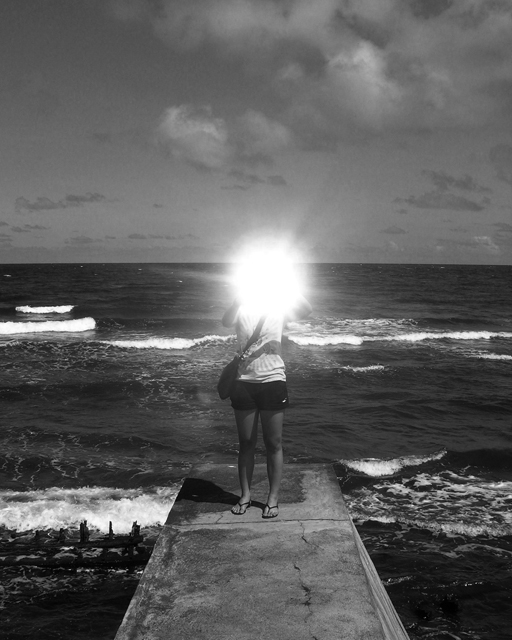
    Works from the exhibition look at how traditional forms, methods, and ancient philosophies inform and serve as the impetus for contemporary works. Cultural nuances and long withstanding beliefs play a tremendous role in Phantoms of Asia. Both Anading and Bunoan aim to capture the complexities surrounding our notions of the intangible. They look at our collective human experience and connection with the earth and the environment, in particular, Anading’s creation of a meditative gaze to the ritualistic gestures as seen in Bunoan’s work. With the flash of a bright light to the image of rolled blankets as sculpture, the two artists use simple gestures as a way to communicate and entice a dialogue with the viewer on our complex existence and mortality.

    While wandering through the exhibition, I couldn’t help but reflect on the definition of the word ‘phantom’ and its relationship to the exhibition and its overall meaning to contemporary Asian Art. Naturally, in looking up the definition, I found the following, as defined by the Merriam Webster dictionary:

    1 a : something apparent to sense but with no substantial existence : apparition

    1 b : something elusive or visionary

    1 c : an object of continual dread or abhorrence

    2 : something existing in appearance only

    3 : a representation of something abstract, ideal, or incorporeal

    Although the popular definition is suitable for the show, the last definition was the most striking, “a representation of something abstract, ideal, or incorporeal”. Both Anading and Bunoan examine the corporeality of objects within an environment as well as byproducts of human existence. The subjects contained in the works provoke the viewer to grapple with notions of transcendence, life, and death. As I stepped into the dimly lit gallery, slowly walking through a pair of glass doors, I saw the work of Poklong Anading. At first glance, the unique display of light boxes from his photographic series, Anonymity (2008-2011), gave the light within the photograph even more illumination.

    The light against the transparent prints provided a stark contrast to the subject’s environments and accentuated highlights and shadows that would otherwise remain flat. Mirrors reflecting blazing rays of sunlight, seeing bare feet adorned by flip-flops, and the surrounding environments of each subject, Anading does a superb job at making the viewer believe this could in fact be anywhere in the world. The faceless subjects were not only anonymous but where their faces once were became a meditative focal point. These subjects become ethereal beings thus forcing the imagination to wonder and the anonymity becomes a meditation. There is a revealing in the unrevealing. In a visual and figurative sense, Anading removes the subject’s gaze to serve as an interpretation of what transcendence may look like. There is a sense of wonder and mystery to the subjects’ lives as the viewer fixates on the light.

    Ringo Bunoan. “Passage”, 2007.

    On the opposite end of universals, Bunoan’s work looks at the concept of death and our connection to the past. In her work, Passage: The Blanket Project (2007), the performative and sculptural work was created while Bunoan was living in Pashupati, Nepal. Living with the sick and elderly, she found materiality to be the least of residents’ concerns and worries. Allison Harding, co-curator for the exhibition, reflects on Passage by noting on the object itself, “Once symbols of warmth, comfort, and rest, the blankets in Passage signify the bodies they covered. Partly memento mori and partly the artist’s farewell to Nepal, the documentation of Bunoan’s work from a single afternoon reminds us that after death, traces of us may remain”.

    In viewing photographs of the Nepalese residents engaging in performative gesture resulting in a sculptural piece that bears a striking resemblance to a casket, the viewer can easily see that much of Bunoan’s work relies heavily on the senses and community. Each rolled up blanket becomes a composite entity, which seems to be a metaphor for the multi-faceted human being, a community, and the interconnectedness of humankind on a global scale. The ceremonial nature of the work serves to remind the viewer that physical remnants prevent us from being wholly detached from spirituality or one another.

    The work of Poklong Anading and Ringo Bunoan fit perfectly in this exhibition in that each set of works extrapolates the enigmatic nature of spirituality, life, and death. Regardless of a viewer’s beliefs, there is something inherent in the pieces that transcend the physical human experience. As humans constantly struggle to understand ourselves, Anading and Bunoan provide us with visual representations of the intangible because the art provides yet more extraordinary explanations to ideas we so desperately try to wrangle and comprehend yet consistently elude us.

    Originally posted to PlantingRice.com, please click here to view additional photos of the exhibition

    ¶¶¶¶¶

    ¶¶¶¶¶

    ¶¶¶¶¶

    ¶¶¶¶¶

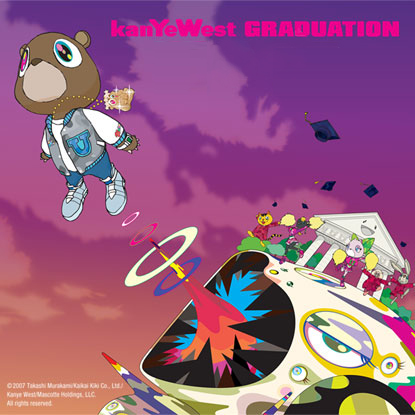
  • This post is long overdue. Months ago, I was reading through various art blogs and websites looking for interesting developments in the art world. One of my resources for art news is ArtInfo, having learned about Takashi Murakami’s current work, I saved a draft post and ONLY now just getting back to it (I originally wrote this back in late January of this year!). I still can’t believe it’s half way through April! What the heck? In any case, he is working on a Godzilla-like movie titled Jellyfish Eyes scheduled for release later on this year. Now, if you’re not too familiar with Murakami’s work, he is the artist responsible for Kanye West’s Graduation album cover.

    Kanye West’s Graduation album cover ~ Image Source: takashimurakami.net

    Many Louis Vuitton fans may also remember a line of bags, accessories, and even a New York 5th Avenue store covered in Murakami’s work.

    Louis Vuitton 5th New York Store ~ Image Source: Hype Beast

    Last year, I read Seven Days in the Art World by Sarah Thornton. Each chapter looks at an important day in the art world (e.g., The Auction, The Crit, etc.). For The Studio Visit, Thornton met with Murakami and some of his staff. One thing that intrigues me is the collaborative effort it takes to manufacture the grandiose pieces. I try to take notice of what makes a particular artist successful and one of the common threads I see (especially across new media artists) is the ability to work with a cross-section of people. Now, I’m not the biggest fan of Murakami’s work but it’s difficult to deny his creative process and prolific production. His work is certainly reflective of human consumption and excess. From album covers (i.e., Kanye West) to the Palace of Versailles, his work is probably the most visually consumed. Reminiscent of Andy Warhol’s art factory, Murakami is an astute artist and business person. It only makes sense that he come out with a movie, right? Right! Quite honestly, I’m really intrigued and will be on the look out later this year.

    Takashi Murakami Talks about his Upcoming Monster Movie from Tom Chen on Vimeo.

    ¶¶¶¶¶

    ¶¶¶¶¶

    ¶¶¶¶¶

    ¶¶¶¶¶

  • ·

    This slideshow requires JavaScript.

    Finally! I am finally getting around to posting photos from the SF Art Fairs Weekend, which was a few weeks ago! Wow. Time flies. In any case, I will be posting captions at some point but please feel free to check out photos of art works that caught my eye at ArtPadSF 2012! Enjoy!!

    ¶¶¶¶¶

    ¶¶¶¶¶

    ¶¶¶¶¶

    ¶¶¶¶¶

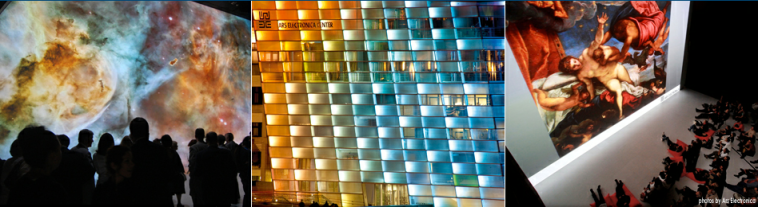
  • Photo by Ars Electronica ~ Click the image above for event details!

    Check out this opportunity to sit in on a web cast regarding the intersections of Arts, Science, Technology, and Society! I’m particularly excited Executive Director of ZERO1, Joel Slayton, will be participating on the panel, “Transcending Limitations: Two of the World’s Foremost Art/Science/Technology Curators Discuss Creativity at this Intersection and its Impact on our Future”. Details and links below!

    *         *         *          *

    Transcending Borders: The Intersections of Arts, Science, Technology, and Society on a Global Stage.

    Join the live webcastfrom 5:00-7:00 PM EST at arts.gov and join in the conversation via Twitter at #neaartsci.

    This international dialogue around the nexus of art, science, technology, and society in the 21st century is convened by the Salzburg Global Seminar, the National Endowment for the Arts, and the Embassy of Austria in Washington, DC. Today’s artists and scientists improve our critical understanding of the world by provoking new ideas, experimentation, and creative strategies. This conversation will feature artists-scientists teams, along with policy makers and curators who champion their work, to examine the impact creativity and collaboration across these sectors can have to shape the world of today and tomorrow.

    ¶¶¶¶¶

    ¶¶¶¶¶

    ¶¶¶¶¶

    ¶¶¶¶¶

  • Prior to cinemagraphs, comment threads, 140 character limitations, and photography, there were Broadsides. Serving as the primary mode of communication for artists and writers around the turn of the 18th century, it was a way for the artist and writer to relay messages to the public. Although one-sided, broadsides gave the viewer an experience of art regardless of their socio-economic status in that broadsides were posted in public spheres where anyone with the ability to read had access to text and image. With no digital divide or privileged information, the broadside may even be considered an early form of urban art, one based heavily on its environment and region. One example that comes to mind is the consideration of the location and posting of broadsides being dependent on the most highly trafficked areas of a city. However, physical location doesn’t mean too much in regard to the information we send and receive–the constant and instantaneous feedback and engagement of the audience seems to be a facet of social interactions, which spill over into contemporary art. Thus, the importance of showcasing traditional and new forms of interaction in the scope of art and literature is valuable and reflective of how communication has progressed and evolved.

    The exhibition, “Broadside Attractions and Vanquished Terrains” curated by Maw Shein Win, Megan Wilson, and Intersection for the Arts director, Kevin Chen, included twelve pairings between artists and writers. The task incorporated a process of interpreting the craft of the broadside based on a film, a piece of music, and a place (real or imagined). Printmaking, drawing, sculpture, painting, and various tools of technologies (i.e., sound, digital photography, etc.) cover the spectrum of mediums used by the collaborating teams. The exhibition does not only explore the concept of the broadside but opens the viewer up to the remnants and byproducts of the creative process of artists and writers, and the relationships between the two. As the viewer reflects on this particular mode of communication, the images, text, space, and performances commingle to revitalize the broadside as the attraction by asking the artist to create an accompanying work show alongside the broadside. With a nod to the “new” technology, it was possible to use your smartphone to access the information the artists and writers used as grist for their mill.

    Eliza Barrios | Myron Michael

    Artist Eliza Barrios projected white, sans serif, block text words in the center of a corner seam of the gallery. Angled rectangles line both sides of the vertical text. These angled boxes contain moving images that led the viewer’s eyes to the words ‘SAINT’, ‘LEAVE’, ‘ANTICIPATION’, and ‘DOMINATRIX’ amongst others.  Barrios’s piece served as the signal to the Broadside, it provided the reader with text and images to take on Myron Michael’s words and somehow contextualize them in their imagination. As a minimalist collaborative work, the strong text and non-conventional projection onto flat surfaces created something astute and concise.

    Misaka Inaoka | Jaime Cortez

    With the pervasive use of social media and re-creation of traditional film cameras for the digital age, the stop-motion photography created from the application, Hipstamatic, brilliantly works alongside Cortez’s written work based on time, loss, and memory. Misa Inaoka and Jaime Cortez works were rich in mystery and poignant. Each line of Cortez’s piece, Untitled, tells a story that builds and evolves. In the opening lines of Untitled, for instance, the story of this enigmatic man sets the tone,

    It was the 30th of May.
    He weighed 300 pounds.
    He was 6 foot 3 inches tall.
    The water temperature was estimated to be 60 degrees.
    The police made the rescue call at to the fire department at 12:30 pm.
    Seems like an awful lot of numbers divisible by three for one little suicide.

    Similar to Cortez’s text, Inaoka’s stop-motion video tells a story that warrants an almost infinite loop of observation. In the content of each frame, Inaoka seamlessly tells an equally mysterious yet engaging story of miracles and memory through simple transitory compositions. Viewers may find themselves reading the text or watching the stills over and over again to capture something that may have been missed as they gain a different meaning each time.

    Karrie Hovey | Elise Ficarra

    Karrie Hovey and Elise Ficarra (along with Evelyn Ficarra) created a large-scale sculptural piece tmade up of incredibly organic shapes and forms that wrapped around the spiral staircase near the Intersection for the Arts gallery entrance. Walking on the spiraling stairs, forms of deer, antlers, and branches made from felt come into view. Translucent words were sprinkled throughout, and sounds from nature emanated from embedded speakers. The sense of hearing something natural against concrete and metal was reminiscent of the urban landscape where humans try desperately to preserve a sense of the natureal with our rooftop gardens atop corporate buildings and parks surrounded by cars. Hovey and Ficarra’s piece harked back to days when people found themselves outside of the home learning more about life through the written word and their physical environment rather than through a virtual world.

    Liz Worthy | Jenny Bitner

    Lastly, audience participation played an integral role in the collaborative work of Liz Worthy and Jenny Bitner. As an exercise in relational aesthetics, Worthy and Bitner take on the idea of Sunday tea complete with friendly interaction. Yet, within the physical space and the objects, such as the tea cups, the table, the dishes, and the cookies, the piece calls upon something deeper from the participant – an intimate moment. Whether the intimate moment was with a friend or one of the artists, an exchange rooted in a reading of Bitner’s piece,Confession expands the idea of intimacy in that it asks the reader to question their own relationships both “real” and “online”. The work uses a sense of whimsy and playfulness as it asks participants to ponder their own idea of interaction and engagement with others;  in this space, the viewer is asked to engage with objects and people in real time in actual physical space.

    The commonality of each collaborative work in the Broadside Attractions and Vanquished Terrains reminds us that even with the endless ability to scroll, “Like”, and reblog the tiny windows we have into each other’s lives, there is something wonderful about returning to a place where our physical senses as well as the mind can engage in concert to create not just a retinal experience but a sensorial one. This exhibition examines and dissects the important relationships between visual artists and writers. The symbiotic nature of these relationships and method of communication prove to be far from blips in the virtual universe. These works reclaim the vanquished terrains taken over by parklets and sky scrapers and asks the viewer to re-imagine a time when you could touch and even feel the written word on paper.

    Exhibiting artists also include:

    Paul Bridenbaugh | Steve Gilmartin

    Keiko Ishihara | Chaim Bertman

    Patricia Kelly | Vince Montague

    Dwayne Marsh | Nana Twumasi

    Nathaniel Parsons | Ly Nguyen

    Christine Ponelle | Annice Jacoby

    Matthew Rogers | Maw Shein Win

    Megan Wilson | Hugh Behm Steinberg

    Please visit exhibition web site here. Originally posted to Stretcher.Org

    ¶¶¶¶¶

    ¶¶¶¶¶

    ¶¶¶¶¶

    ¶¶¶¶¶