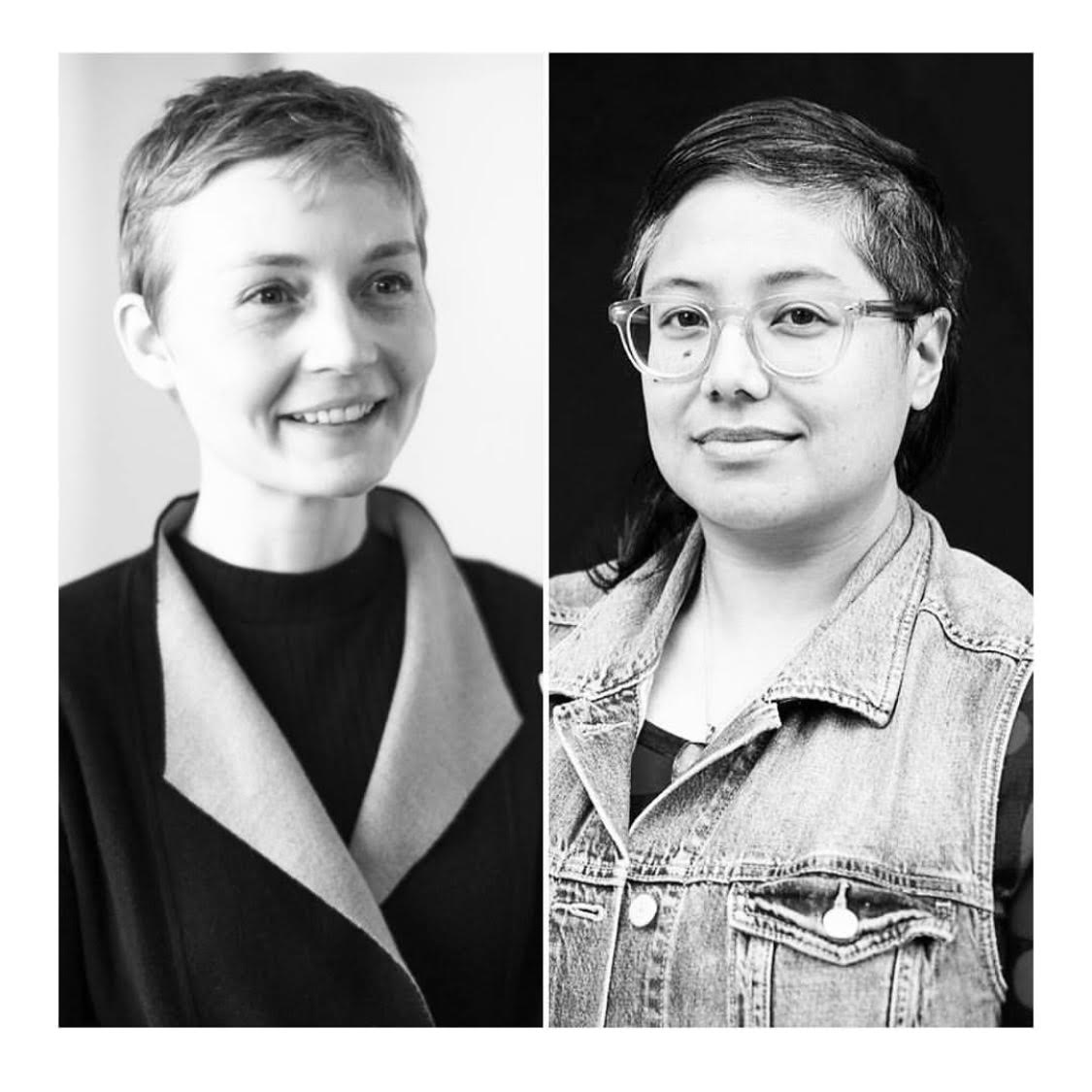
On Friday, March 19th, KSW Presents “Spirit Houses” a reading featuring Maw Shein Win, author of Storage Unit for the Spirit House (Omnidawn, 2020) and Khaty Xiong, author ofPoor Anima (Apogee Press, 2015). This event is a celebration of Maw Shein Win’s newest collection and of both poets’ powerful work performing rituals of grief, pain, and the life after it and with it.
I have the great honor of being an opening reader/poet of this wonderful event. Starts promptly at 6 PM PST.
You don’t owe anyone anything. If you need to rest and step back, THAT is OK. Also, rest is an important part of the work, research, and creative process. Perhaps you’ve been feeling burnt out, well, your body is probably telling you to take it easy.
Productivity is challenging for so many people. Whether you live on your own, with family, and/or a partner, there is a lot of shifting going on. Be open to the shifting that is happening and be still for it (and delve into whatever practices bring you ease and comfort).
If you’re the type that really feels compelled to do or make something, reach out to a friend or someone you trust and discuss your ideas and be open to vulnerability at this time.
Try your best to not feel guilty if you’re making. I’ve been seeing some really negative things out there bashing on folks for creating at a time like this. This is what we say to haters 👋🏾👋🏾👋🏾 and thank you 🙏🏾
Comparing, at a time like this, well, please try to refrain from this activity as it will only cause you distress. Nobody has the skills or experience you have in the particular way you do. So, it’s not that productive to compare yourself especially now.
Create ritual(s) for yourself. Find activities that enable you to ground yourself. These things are equally if not more important than whatever you’re making! THIS IS REAL. Trust. As someone who is survivor of severe traumas, my rituals have saved me.
If you’re just wanting/needing inspiration, try making a list of your favorite things using good ole pen/pencil and paper! Be silly, make it fun, and/or as deep as you want/need. Writing is such an embodied experience that many of us don’t do anymore.
Don’t feel compelled to do what you see on social or any other place for that matter. Just because everyone is doing this and that doesn’t mean you have to do it too. Unless you really want to. Again, you don’t need to do, make, or produce anything as proof of your existence!
Also, making, doing, and producing (AT ANY TIME) is hard AF, but it’s extremely difficult at a time like this. If you want to make and NOT share with the world, that’s OK too. Do what is best for you. But also, see #5.
PLEASE, if you’re experiencing serious challenges, difficulties, and/or distress, reach out and ask for help. Feel free you share your thoughts too and yes, reach out if #10 is where you’re at. I will do what I can to assist, support, and/or connect you to a resource. ♥️
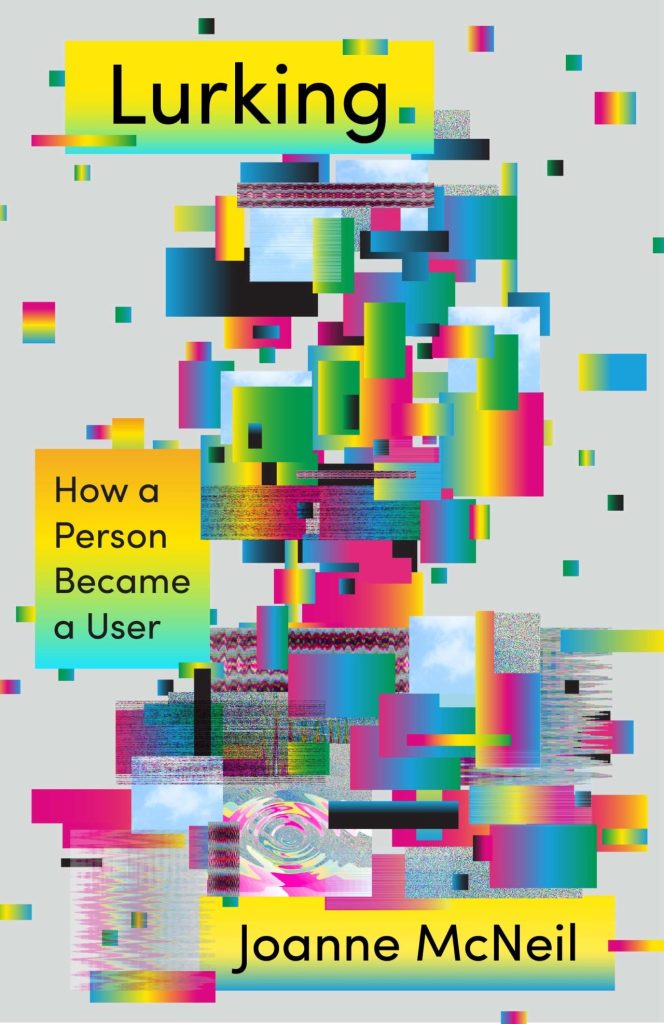
Image description: Gray book cover with geometric block shapes of different colors. The text on the cover reads Lurking How a Person Became a User Joanne McNeil.
Event date and time: Friday, May 22, 2020 from 11:00 AM – 12:00 pm PST / 2:00 PM – 3:00 PM EDT
For this afternoon Open Hours, Eyebeam welcomes Eyebeam Alum and writer, Joanne McNeil in conversation with artist, writer, and educator, Dorothy R. Santos who will lead a discussion diving into McNeil’s new book, Lurking: How a Person Became a User released this year by MCD.
Each of the artists on the panel have created work that explores different kinds of representations of the body, embodiment in virtual space, and the non-human subject. The conversation will unpack how emotions are rendered and mediated by digital technologies, and how different affective experiences unfold across mixed realities to inform newfound modes of being born in contemporary media landscapes.
To learn more, please click here to visit the Silicon Valet website and read about the online exhibition Well Now, WTF? curated by Faith Holland, Lorna Mills, and Wade Wallerstein.
Pardon the redundancy, but in 2020, I will be posting on my site a lot more this year since I’m trying to moderate my use of social media platforms such as Instagram and Twitter. For those that have seen this on my Instagram account and reading it again, thank you. For those that haven’t seen this list, please feel free to share your lessons learned. 🙌
Ten things I’ve learned from the past decade:
10) Be humble.
9) Patience really is a virtue.
8) Healing takes time, it can’t be rushed and when you attempt to rush it, well, you’re making things more difficult for yourself.
7) Things are not always what they seem. Take time to learn (see #9).
6) Life is hard and strange, yet filled with a lot of wonderful and unexpected things.
5) Sleep, eat well, and hydrate on a regular and consistent basis.
4) Your real friends and chosen family are the ones you can have difficult conversations with and still feel love (probably more so than before the tough conversation).
3) Expect change and check-in with yourself on a regular basis.
2) It’s perfectly OK to ask for help and support when you need it.
1) Follow your gut, your intuition, and steer clear when everything in you tells you to do so.
A decade ago, I was going through some really painful moments in my life (such as, coming close to death). So, I’m not surprised that the past few years have been challenging and sorrowful for different reasons. Working on yourself never goes away, no matter your circumstances. As the hierophant reminds us, there is more than what you see before you. Please remember that, life beyond any screen is so much more than what we see. So, please, don’t compare yourself or think you haven’t achieved anything. If you were in pain, sick, in danger, compromised in anyway, please know I see and hear you. There is so much more we don’t see in the world. Whoever you are, reading this, I hope you‘re kind to yourself today and hereafter. You’re so much more than mere images. ♥️
I’ll get right to it…I’m quickly approaching my work anniversary with the Processing Foundation. As of March 2020, it will be two years with this extraordinary organization. I’ve had the pleasure and honor of working with an epic group of artists and educators. While every endeavor has taught me the intricacies of non-profit life and brought on some impostor syndrome, it’s been such an incredible learning experience.
As the Foundation’s program manager, I’m often behind the scenes (helping run social media, writing newsletter, helping keep things running, and supporting projects, just to name a few of the things I do). I wanted to share the #SupportP5 campaign I worked on these past few months as well as highlight the artists who generously donated artwork for the campaign – Maya Man, Cy X, Kate Hollenbach, and Saskie Freeke. This is also the most ambitious fundraising campaign I’ve ever worked on. My hope is that you, yes you, reading this…help spread the word about the campaign. We can use ALL the support and help raising funds to help us continue the work that makes the Processing Foundation such a special place for artists, writers, technologists, creative coders, and educators around the world. Please click here to access our Donorbox page and contribute what you can. If you’re feeling generous, starting at the Objects level ($50+), you will receive artwork. The more you give, the more artwork you will receive! 😃 Quite the win, if you ask me. Check out the gallery of work donated to the campaign below.
Not a picture but an event (2019) by Maya Man, Riso print #3, 11″x17″
Geometric Shapes Processing Edition 2019 by Saskia Freeke, 12″x12″
Computer Visions 10.18.2019 (2019) by Kate Hollenbach, 5″x7″
A Coding Train Zine (2019) designed by The Coding Train community manager Cy (signed by Dan Shiffman)
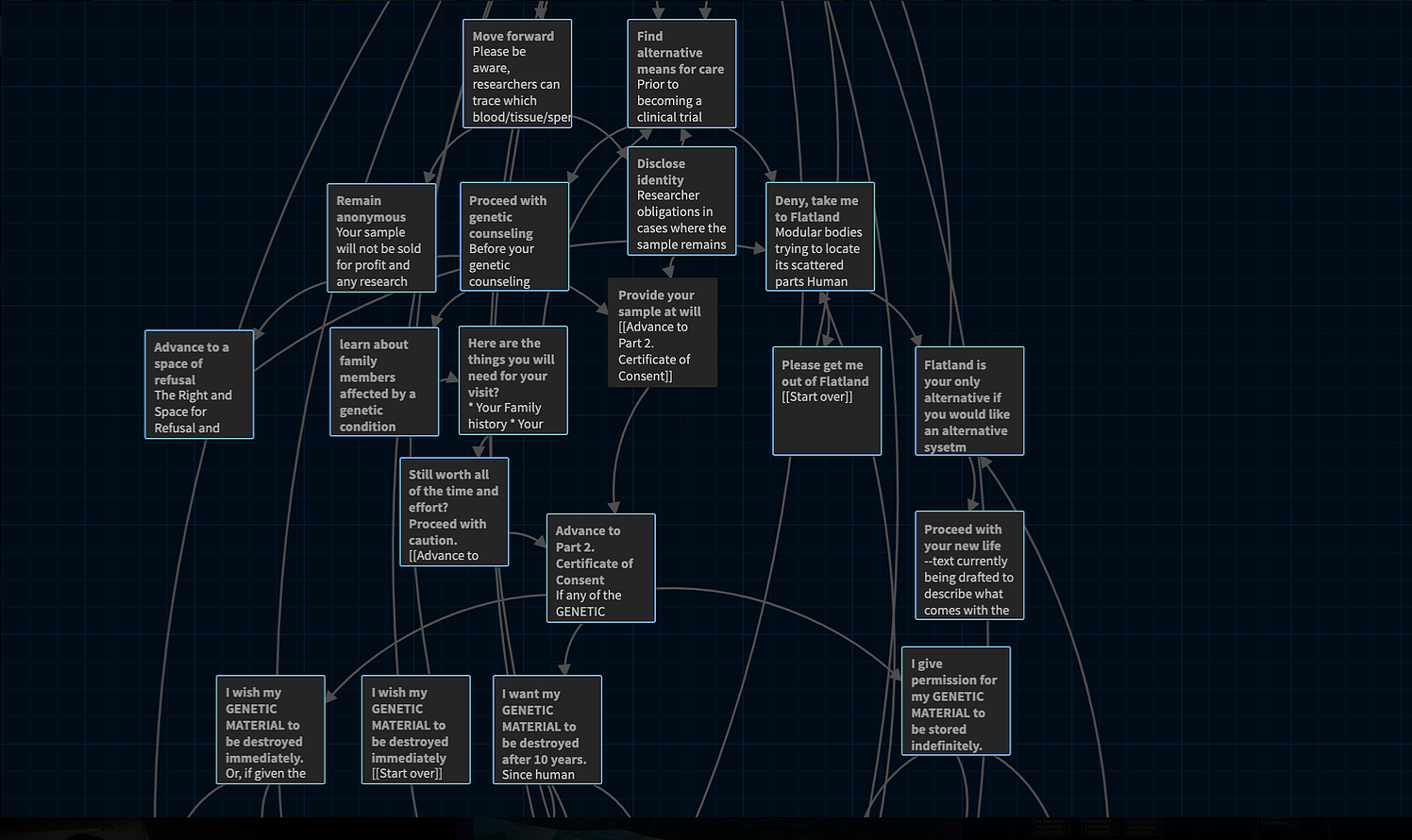
Mapping of a story line for Press 1 to be Connected in the open source platform, Twine
About Reclaiming the Future
“What is at stake for the human animal in this critical moment in our evolution? Will we survive this “technological adolescence”? How can we reclaim optimism in the face of future technology? On August 17, 2019, a group of creative thinkers and makers will assemble to consider these questions in a radical new conversation format.
Unfiltered. Unmoderated.
A Long Conversation is a relay of two-person dialogues for a set period of time, unified by a common prompt. Each speaker brings one idea to the stage about how to reclaim optimism in the face of future technology—a trend, an artwork, an innovation, a breakthrough, a movement.”
I’m excited to share that I’ll be showing my work Press 1 to be Connected. I’ve been working on this piece for the past year, but realized its physical form (and became obsessed with telephone technology, systems of care, and telecommunications) during my Stochastic Labs residency. I feel incredibly honored to be among extremely phenomenal artists, writers, scientists, and cultural producers at Reclaiming the Future.
And, suffice it to say, I’ve got a thing for the future as well 😉
I’m excited to give an artist talk over at Real Time Space Studios. I’m currently working on a text-based artwork about genomic research, informed consent, and contemporary science. It’s going to be extra special considering one of my favorite people will be giving an artist talk as well – Heather Dewey-Hagborg! Please join me on Wednesday, July 24th, from 7-9 pm at 125 10th Street, Oakland, CA 94607.
Heather Dewey-Hagborg is a transdisciplinary artist and educator who is interested in art as research and critical practice. Her controversial biopolitical art practice includes the project Stranger Visions in which she created portrait sculptures from analyses of genetic material (hair, cigarette butts, chewed up gum) collected in public places. Heather has shown work internationally at events and venues including the World Economic Forum, the Daejeon Biennale, the Guangzhou Triennial, and the Shenzhen Urbanism and Architecture Biennale, the Van Abbemuseum, Transmediale and PS1 MOMA. Her work is held in public collections of the Centre Pompidou, the Victoria and Albert Museum, and the New York Historical Society, among others, and has been widely discussed in the media, from the New York Times and the BBC to Art Forum and Wired. Heather has a PhD in Electronic Arts from Rensselaer Polytechnic Institute. She is an artist fellow at AI Now, an Artist-in-Residence at the Exploratorium, as well as Science Center, and is an affiliate of Data & Society. She is also a co-founder and co-curator of REFRESH, an inclusive and politically engaged collaborative platform at the intersection of Art, Science, and Technology.
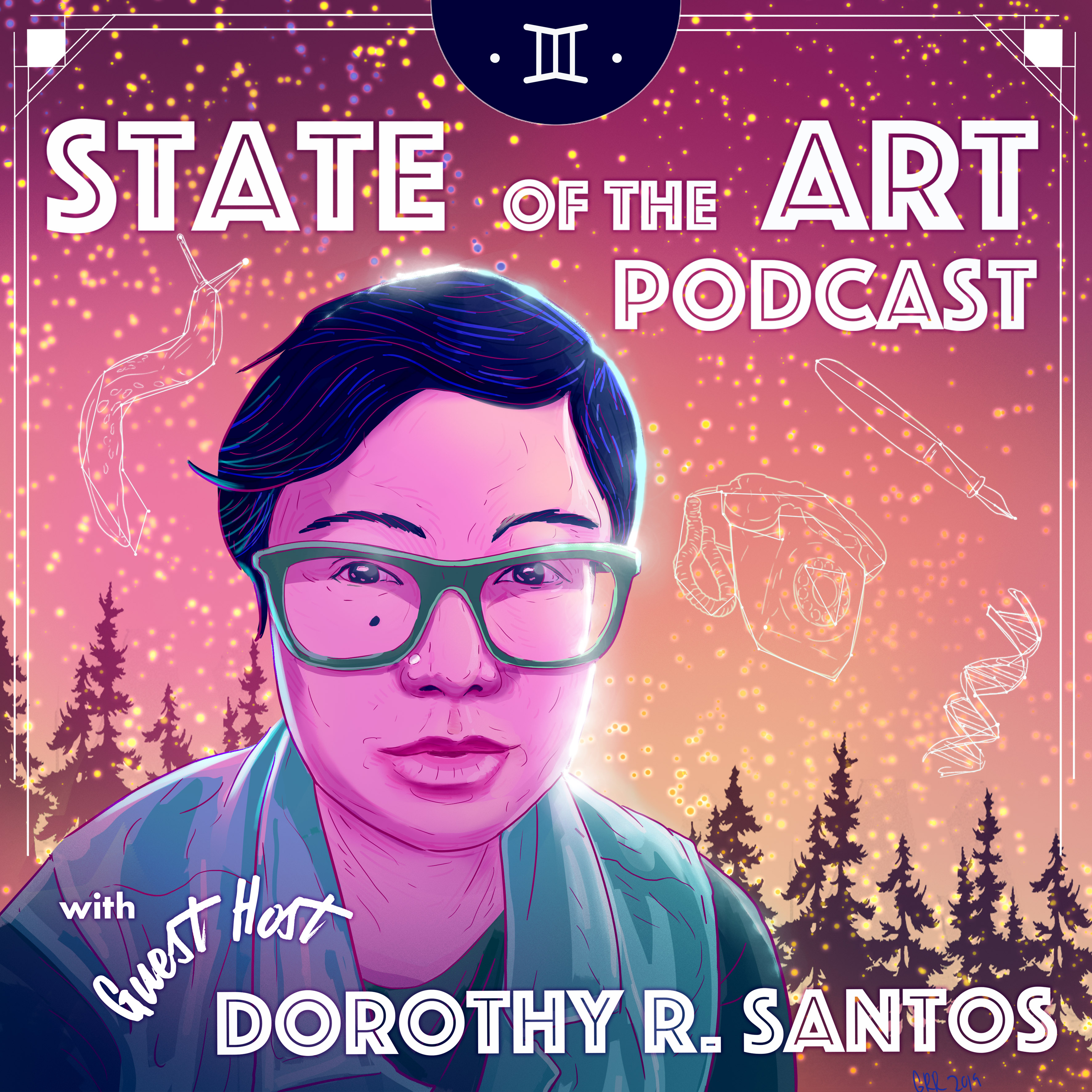
Podcasting has expanded the way I research, write, and think about the world. I am super thrilled to share that I am taking over the month of June over at @stateoftheart podcast. I’m speaking with four incredible artists this month on meditations of queerness in anime, manga, film, digital media, comics, and creative coding. Super stoked to be in conversation with Anum Awan, Yasheng She, Breena Nunez, and Lark VCR 🥰🦄🙃🌈
The first season of PRNT SCRN has officially ended! It’s been such an incredible learning experience. For this episode, I speak with Bay Area-based artist Jenny Odell. Learn more below!
Lastly, and most important, I want to thank the brilliant team over at Art Practical! They’ve given me an awesome home to create the content for PRNT SCRN. Special thanks to Leila Weefur (EIC for Audio/Visual), Marissa Deitz (Editor), Vivian Sming (EIC for online publication), Michele Carlson (Executive Director), Fiona Ball (Managing Editor), and Mia Nakano (Communications Manager) for being such a wonderful team of people to work with.
In an age where we are inundated by a seemingly endless scroll of images and living within an economy that demands an inordinate amount of our attention, it feels necessary to ask what is the value of doing nothing? It is much more evident now than ever before that social media platforms are another tool for advertisers and corporations to learn our desires through likes and clicks encouraging us to stay glued to our screens and monitors. In 2017, Bay Area-based artist Jenny Odell gave a talk at the annual EYEO festival titled “How to do Nothing,” which resulted in a book of the same name. I have been following Odell’s artistic practice and writing since she was in graduate student pursuing her MFA at the San Francisco Art Institute. With a background in literature and having taught Internet Art at Stanford University for several years, her wealth of knowledge related to networked culture to free things advertised on Instagram that aren’t actually free, she has an uncanny ability to craft stories emblematic of our digital age. In this episode, The Value of Doing Nothing, I spoke with Odell about exercises in attention, space for refusal, bonding over our experience of an Ellsworth Kelly painting at the SFMOMA, and much more. The irony of Odell’s call to action, being that of doing nothing, leads us to the multitude of ways that stepping back from time to time enables and affords us the opportunity to learn how to observe the world around us, actively listen, and fastidiously mind the details we might normally overlook.
Hear Jenny Odell speak on her new book How to Do Nothing: Resisting the Attention Economy at East Bay Booksellers on Thursday, April 18, 2019, at 7 pm. Read more about the event by clicking here.
For more information on this week’s Screenshot, the app ULTIMEYES, click here.
You can also access all of this season’s episodes here!
Jenny Odell is a multi-disciplinary artist and writer based in Oakland, California. Her work generally involves acts of close observation, whether it’s birdwatching, collecting screen shots, or trying to parse bizarre forms of e-commerce. In one of her favorite projects, she created The Bureau of Suspended Objects, a searchable online archive of 200 objects salvaged from the San Francisco dump, each with photographs and painstaking research into its material, corporate, and manufacturing histories. She is compelled by the ways in which attention (or lack thereof) leads to consequential shifts in perception at the level of the everyday.
Her visual work has been exhibited at The Contemporary Jewish Museum, the New York Public Library, Ever Gold Projects, the Marjorie Barrick Museum (Las Vegas), Les Rencontres D’Arles, Fotomuseum Antwerpen, Fotomuseum Winterthur, La Gaîté Lyrique (Paris), the Lishui Photography Festival (China), the Pratt Manhattan Gallery, apexart (NY), East Wing (Dubai), and the Google headquarters. She’s been an artist in residence at Recology SF (the dump), the San Francisco Planning Department, the Yerba Buena Center for the Arts, the Palo Alto Art Center, Facebook, and the Internet Archive. She teaches internet art and digital/physical design at Stanford since 2013.
Her writing has appeared in the New York Times, SFMOMA’s Open Space, McSweeney’s, The Creative Independent, Sierra Magazine, Topic, and Real Future. My book, How to Do Nothing: Resisting the Attention Economy, was recently published by Melville House. She is represented by Caroline Eisenmann at the Frances Goldin Literary Agency.