


What happens when the viewer has the ability to control placement of letters to form words with their body and through gesture? How does this form of participation translate to art? How does the interface dictate the way the work is received? Please view Camille Utterback’s work, Text Rain, and share your thoughts.
-
¶¶¶¶¶
¶¶¶¶¶
¶¶¶¶¶
¶¶¶¶¶
-

One Hundred Live and Die, Neon and glass tubing, 1984 by Bruce Nauman If you haven’t guessed from recent posts, language and text-based art have been on my mind lately. This also means I’m looking at words and reading a bit more attentively than usual. Bruce Nauman’s piece, One Hundred Live and Die, displays a wide array of short sentences with words ‘live’ or ‘die’. His simple use of nouns and verbs in neon lettering bring much more complexity to one’s understanding of life and death. Calling attention to their depth through simplified visual representation. With so many different ways to display and showcase typography and text of any type, the audience grapples with meaning and semantics. Wishing I could see this piece in person…one day I will.
¶¶¶¶¶
¶¶¶¶¶
¶¶¶¶¶
¶¶¶¶¶
¶¶¶¶¶
-
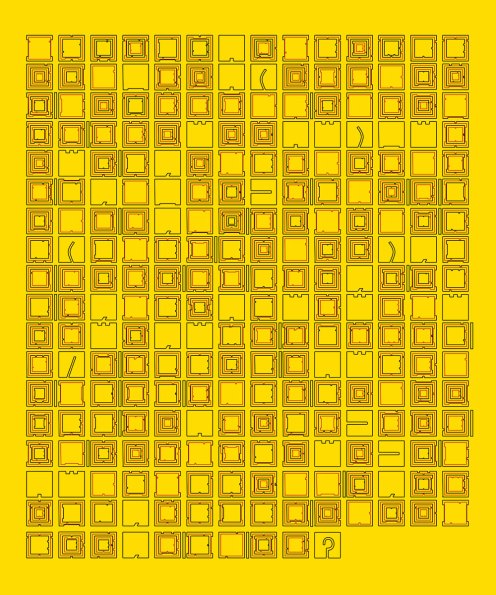
"It Has Many Tints And Hues", Archival Inkjet Print, 20" x 24", From the "Primary, Black and White" Series, 2011 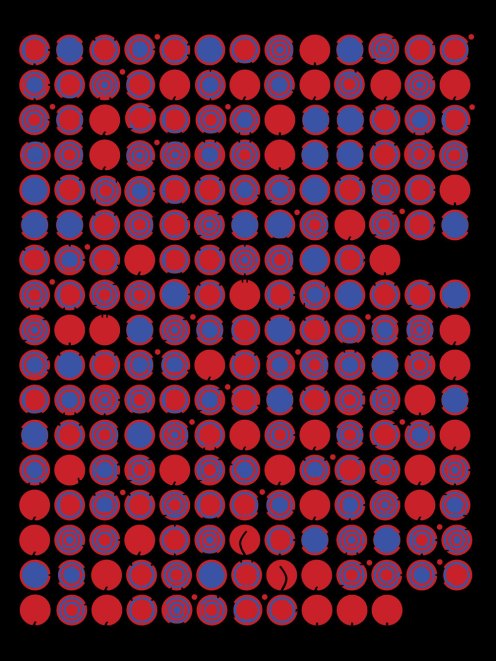
"Red Is The Boldest…", Archival Inkjet Print, 18" x 24", From the "Primary, Black and White" Series, 2011 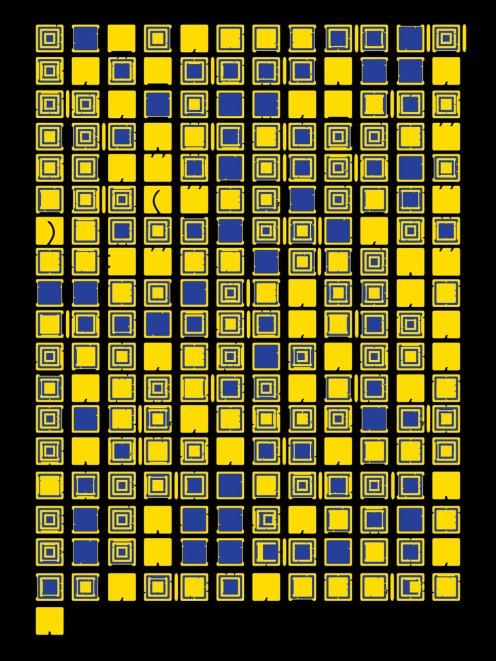
"Yellow Is A Color…", Archival Inkjet Print, 18" x 24", From the "Primary, Black and White" Series, 2011 Please click here to learn more about the Primary Black and White Series.
¶¶¶¶¶
¶¶¶¶¶
¶¶¶¶¶
¶¶¶¶¶
¶¶¶¶¶
-
Social history is widely understood, but what is ethnography? It is a genre of researching and writing with its roots in anthropology. Its main investigative method is “participant observation” – a cluster of qualitative modes, which include firsthand experience of the environment, careful visual observation, attentive listening, casual on-the-hoof interviewing as well as formal in-depth interrogation, and the analysis of telling details and key documents. Participant observation is a self-conscious formalization of the naturalistic modes through which we learn generally; toddlers learn to walk and talk through a similar form of wide-eyed questioning and involvement. The participation part of the exercise usually transforms the researcher; we don’t wear a white lab coat and latex gloves to protect ourselves from what we’re studying. We don’t cling rigidly to old values but go into our chosen milieu with an open mind. In so doing, we usually change it.
~ Sarah Thornton, Art Writer (Excerpt from the Author’s Note section of her book Seven Days in the Art World)
¶¶¶¶¶
¶¶¶¶¶
¶¶¶¶¶
¶¶¶¶¶
¶¶¶¶¶
-
Those who know nothing of foreign languages know nothing of their own.
~ Johann Wolfgang von Goethe – German Playwright, Poet, and Novelist
¶¶¶¶¶
¶¶¶¶¶
¶¶¶¶¶
¶¶¶¶¶
¶¶¶¶¶
-
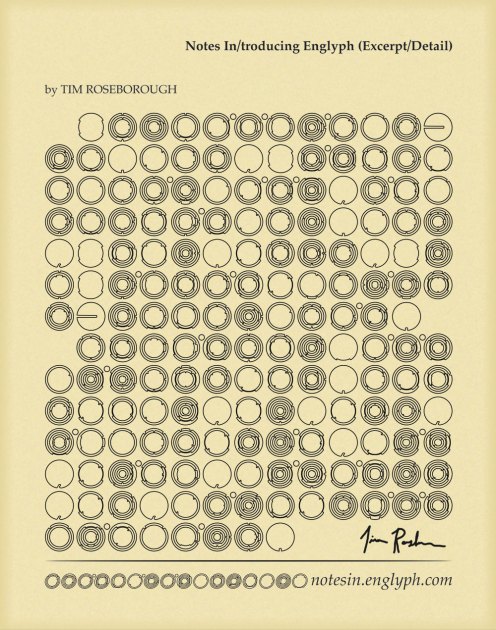
Tim Roseborough’s language, Englyph, puts a different perspective on text-based art. At first, it’s difficult to envision Englyph as synonymous with English because it’s rather foreign (literally). As Roseborough explains in his piece, Notes In/troducing Englyph, the aim is to take what we know and make it into something we don’t know. Truthfully, if Englyph were the only mode of communication, I’m sure the reader would begin to create and affix meaning to the characters over time. Yet, who wants to brave this territory? Who is willing to engage in this process of reduction? Glyph by glpyh? Interestingly enough, this mode of interactive, text-based art has me convinced that Roseborough’s future projects will further push our understanding and perceptions of visual language and, perhaps, giving a new meaning to symbolic language.
To fully grasp his art work, you must interact with the piece online. Please click here to experience Englyph.
¶¶¶¶¶
¶¶¶¶¶
¶¶¶¶¶
¶¶¶¶¶
¶¶¶¶¶
-


Please click on the images above to see how these visuals relate
¶¶¶¶¶
¶¶¶¶¶
¶¶¶¶¶
¶¶¶¶¶
¶¶¶¶¶
-
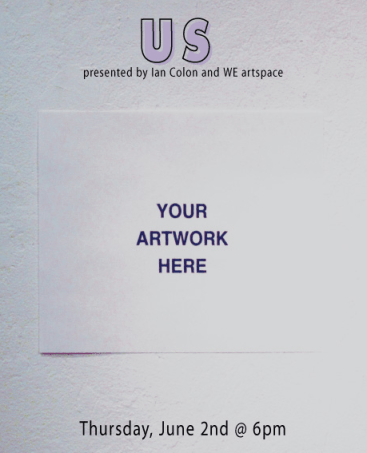
US = You + Me Basically, relational aesthetics is when someone with an MFA wants to meet new people but because they spent all that time pursuing an MFA, they don’t know how to talk to people normally and they got really poor social skills. Umm, and they can’t find no other way to meet new people other than forcing them into odd activities at their own poorly attended art openings. Umm, relational aesthetics is also when a successful artist, who is too busy touring the globe going from biennial to biennial and they have no time to create physical objects anymore. So, the famous artist uses the attendees at the exhibition as the artwork, in some way, to explore the social relationships between people.
~ Hennessy Youngman, Artist/Thinker
US was a completely unexpected flurry of fun activity that involved the old fashioned way of social networking – introducing yourself and talking to people. Go figure. Yes, friends, this is art. A combination of theatrics, curiosity, social graces, and diverse individuals made this exhibition successful versus Youngman’s assertion that a famous globe trotting artist has the credibility to execute this type of performance art. Granted, Youngman’s point may be true for some MFA students but certainly not the MFA students I’ve met. US was a fantastic way for people to explore their understanding of roles and constructs within the art world. All I’ve got to say is, umm, that’s brilliant, yo.
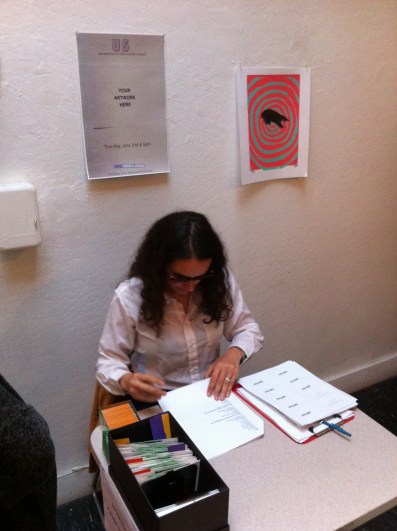
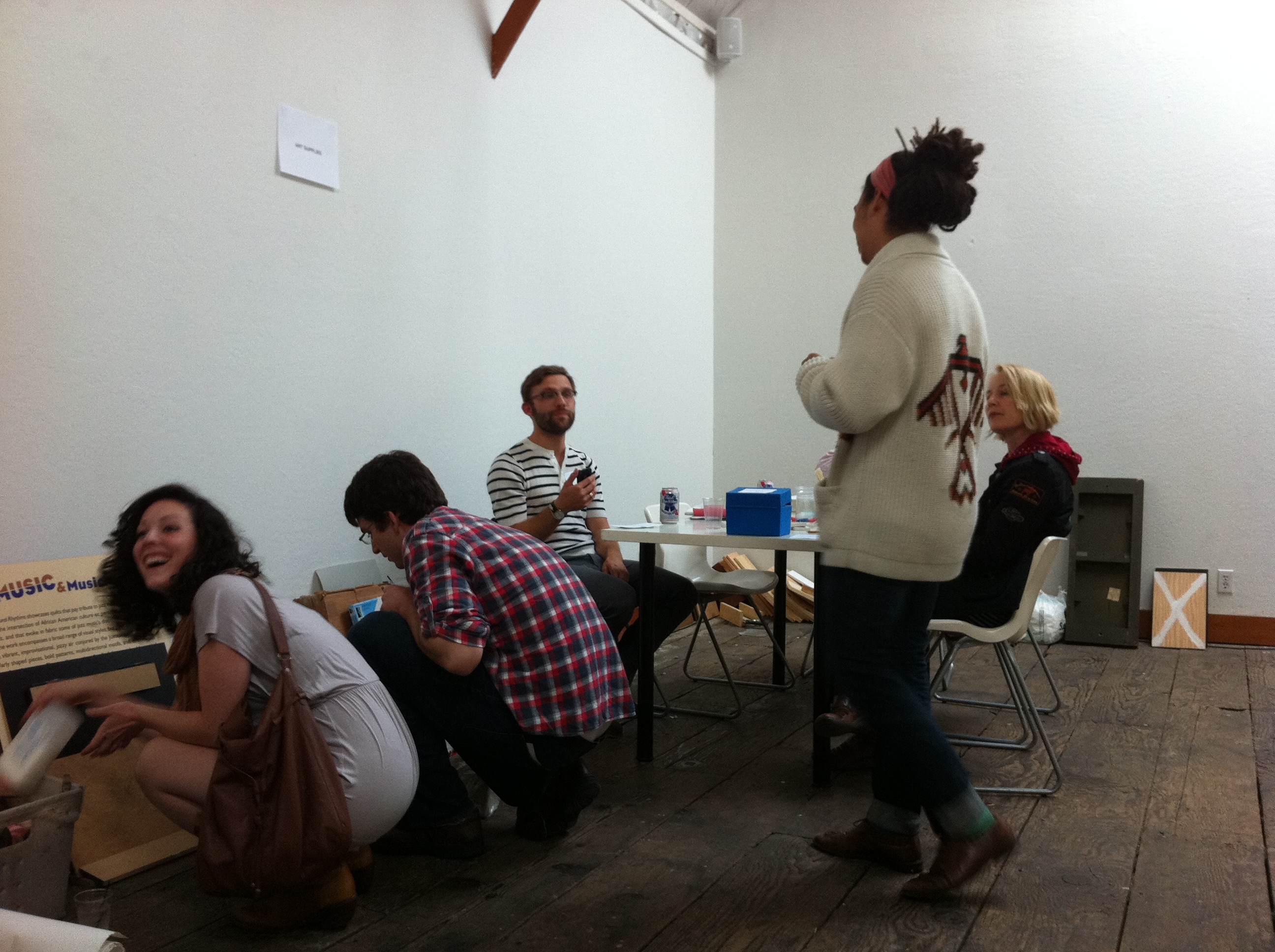
Entering the US show, being greeted, and given a 'role' for the exhibition… Prior to entering the main gallery, participants had to register. I was given the ‘role’ of Reporter along with a clipboard, pen, and questionnaires. The questions were different to allow for a multitude of thoughts and reactions to be documented. Personally, I wanted to be a Theorist but if Ian Colon and WE Space continue to create these opportunities, I may just get my wish! Who knows. Before I forget because I’m sure you’re wondering, the roles included…
* DJ * Artist * Reporter * Theorist * PR * Collaborator * Photographer *
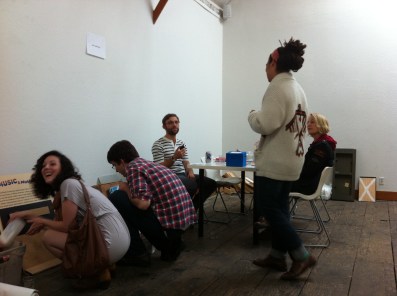
The beginning of the evening and folks gradually working together according to their role 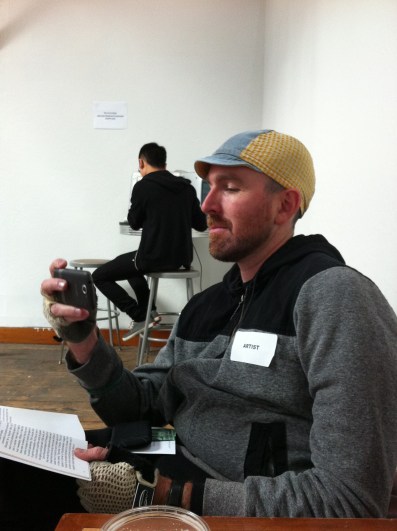
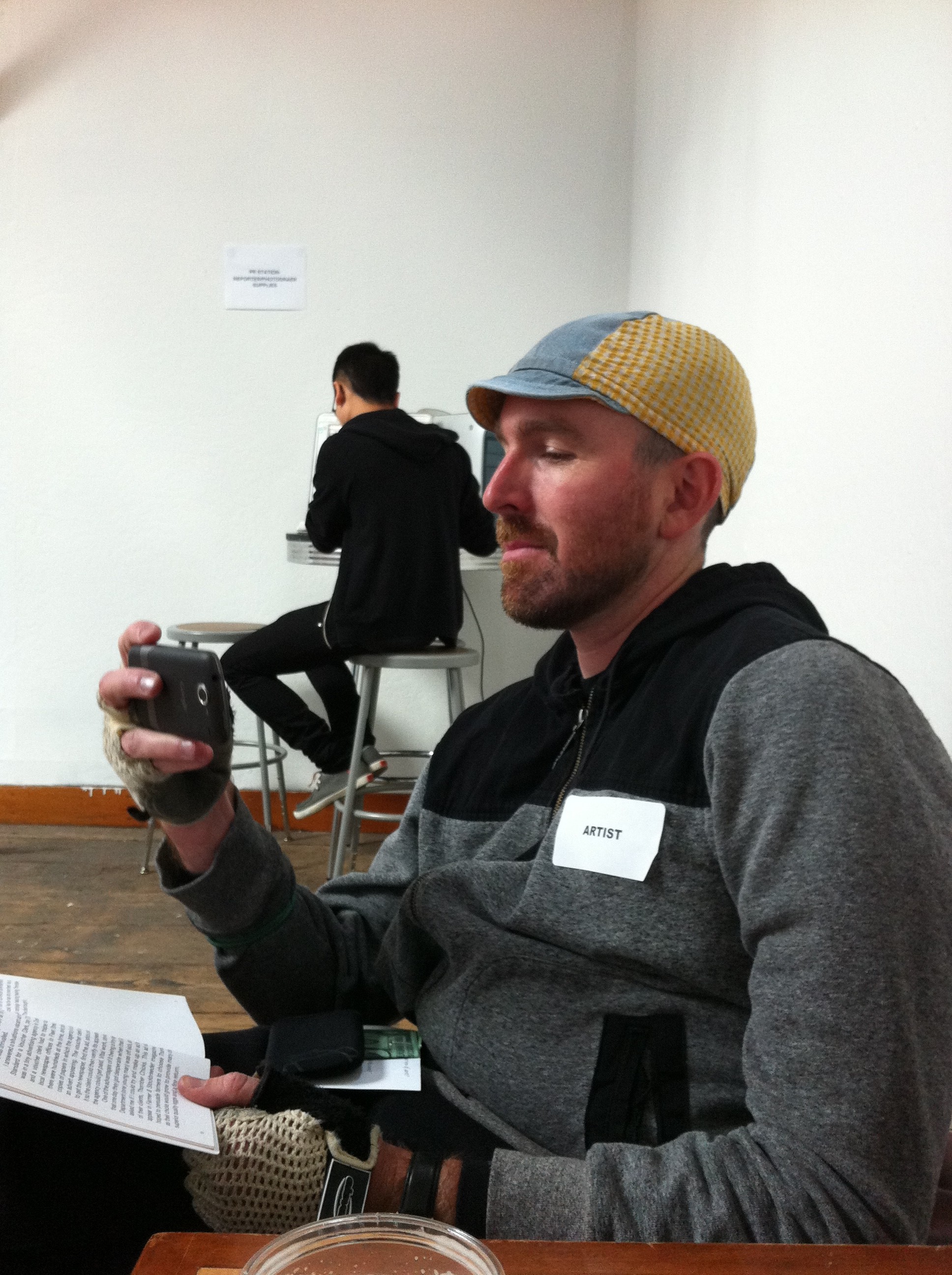
Reporter (Moi) interviewing artist (Jeremiah) My first interview was with an artist. One of the most memorable answers from our conversation entailed his breadth of knowledge regarding performance art (i.e., Tom Marioni and Tino Sehgal – I was impressed). Obviously he was well aware of relational aesthetics. Art certainly is an intellectual interest but, admittedly, he came for his friend and thought it would be a great experience. Another interview with friend (Aimee Espiritu, real-life artist and educator) who took on the role as PR answered the questions as herself AND her role!! The ways in which her answers differed showcased her real life PR skills as she doled out the art world vernacular combined with personal reflection.
As individuals trickled into the gallery, I conducted a couple of other interviews and the answers ran the gamut from thought provoking (Pascal, another PR person stated, “The art is invisible” – That was quote of the evening for me!!) to engaging to silly (i.e., apparently, there was male artist present who identified best with the basket making community of San Francisco and burns every basket he makes). Yes, these types of answers are inevitable when you ask people to participate in art.

Ready for artwork During my interview with Aimee, she raised an interesting point about the overall set up. Walking into US, neither of us knew what to expect. Learning that the participants’ experiences would dictate the evening and the community created that evening was a pleasant surprise. Participatory art has always involved a direct engagement with the artist and usually entails the artist explaining some aspect of their work. US relied more on the participants willingness to dive into their role and utilize or act out what they believed their role to be. Overall, it was a great experience and what a nice introduction to relational art for those that have never experienced it. Well done, Mr. Colon and WE Space!! 🙂

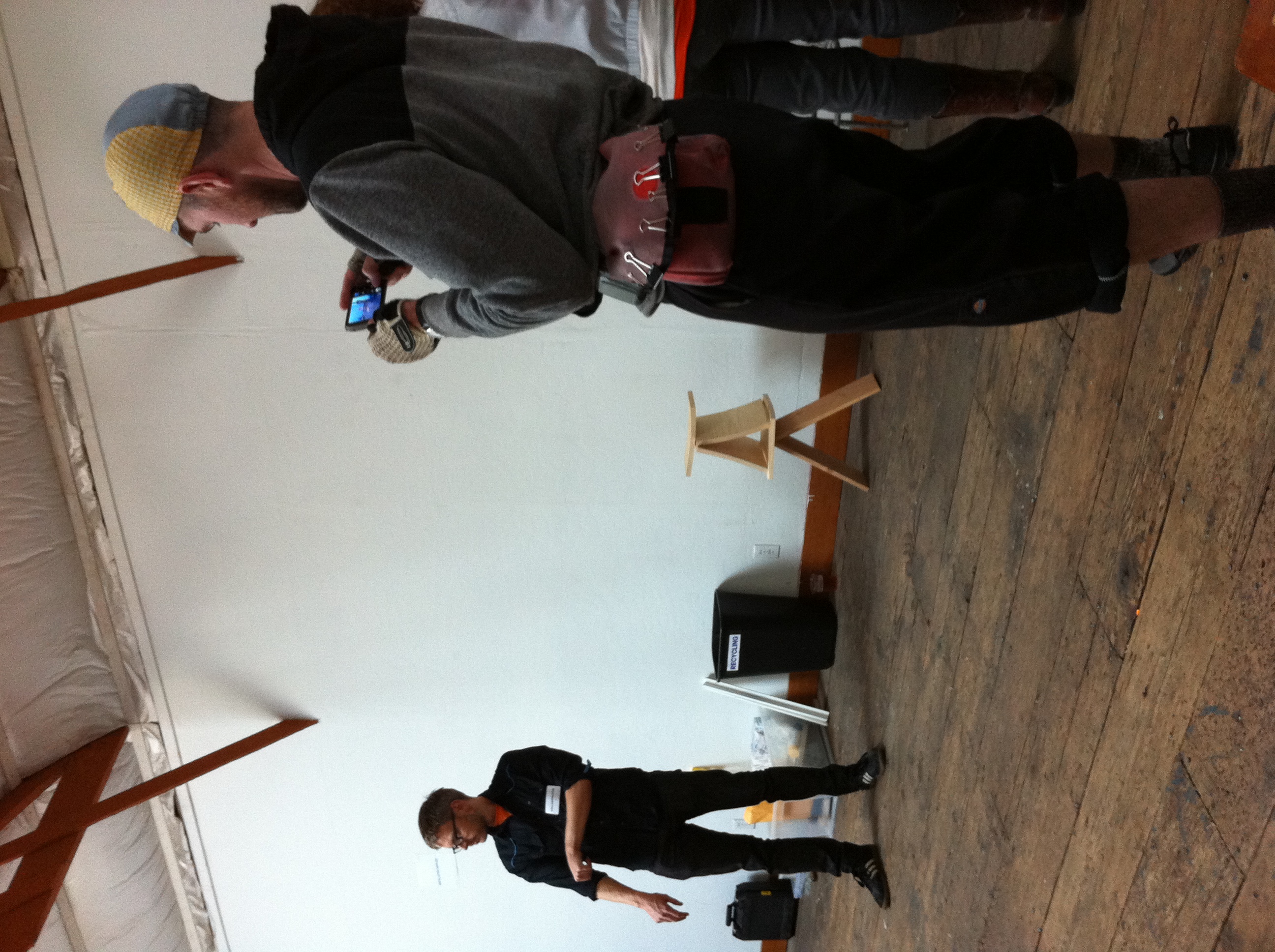
Artist (right) working with a Collaborator (left) ¶¶¶¶¶
¶¶¶¶¶
¶¶¶¶¶
¶¶¶¶¶
-
Reinterpretations, remakes, and contemporary works are strategically placed throughout God Only Knows Who the Audience Is: Performance, Video, and Television Through the Lens of La Mamelle, engaging viewers in what is almost an infinite loop of observation that changes with every go-around. Douglas Davis’s The Last Nine Minutes (1977) welcomes viewers to the second floor of the exhibition. The video piece involves Davis walking around a space that simulates a dark cave. Viewers’ anticipation bubbles to the surface as they wait for him to acknowledge his audience. Within the uncharted territory of television as a means of engagement with a spectator, Davis’s gestures and acting serve as a metaphor and barrier between the artist and viewer. The onus falls on the viewer to acknowledge the artist.
In Mario Garcia Torres’s All That Color is Making Me Blind(2008), a lone black screen with scrolling green type reminiscent of a teleprompter provides context for the grid of televisions displayed across from it. The scrolling text imparts the language associated with the visual information received by the grid. The multiscreen artwork displays television spots artists have bought to disseminate art to the masses—a startling reminder of television’s osmotic effect on its viewers. Both Davis’s and Torres’s works require a curious and engaged audience. Yet, as the name of the exhibition suggests, the nature of questioning and understanding in performative and video-based art is inherently cyclical.
Pitch-black walls on the second level simulate a hermetic box, in which videos playing performative acts are the only stimulation. The works both insulate and isolate: much like the onscreen subjects, viewers become inaccessible once they are enveloped by the onscreen work. Although each artwork has been set up to replicate a living space, creating an atoll of viewing islets, there is an unrelenting cacophony from the other televisions. With the multitude of sounds and experiences working in tandem, viewers are forced to play close attention and actively search for understanding or resonance. As a result, they concentrate on particular aspects of the video performances that might otherwise go unnoticed.

Mario Garcia Torres. All The Color Is Making Me Blind (Notes on the Beginning of the End of Video Art), 2008; nine-channel video installation. Courtesy of the CCA Wattis Institute for Contemporary Arts. Photo: Dorothy Santos.
Active watching and viewer engagement are paramount in the works of the art collective La Mamelle/ART COM. The act of watching as a primary mode of experiencing the exhibition serves as the foundation for dialogue and conversation, which is imperative in the discussion of how arts and technology work together to explore the role of spectator. The work inGod Only Knows Who the Audience Is demonstrates the creative and investigative processes of performance, video, and television, and the ways contemporaneous study is imperative in examining the evolution of performance art and spectatorship.
GOD ONLY KNOWS WHO THE AUDIENCE IS: PERFORMANCE, VIDEO, AND TELEVISION THROUGH THE LENS OF LA MAMELLE IS ON VIEW AT THE CCA WATTIS INSTITUTE FOR CONTEMPORARY ARTS, IN SAN FRANCISCO, THROUGH JULY 2, 2011.
Originally posted to Shotgun Reviews, please click here to view
¶¶¶¶¶
¶¶¶¶¶
¶¶¶¶¶
¶¶¶¶¶
¶¶¶¶¶
-
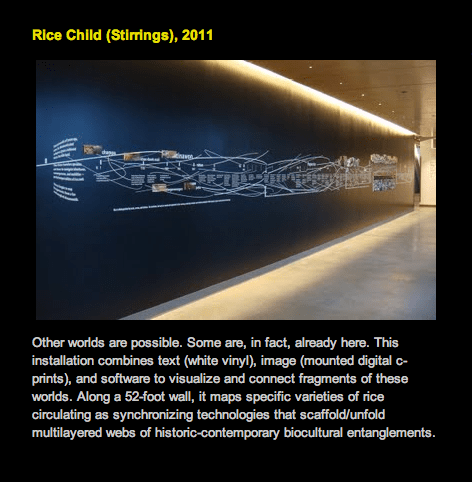
Screenshot from Artist's site I’m a sucker for fragmentation in art work. Displacement, imagined worlds, and elements of morphology (urban morphology) all collide in Elaine Gan’s work. It’s not an easy task to pull from a multitude of cultures and sub-cultures to create a cohesive and well executed visual landscape of diverse imagery. Gan’s approach to creating visual representations within a western frame is captivating in that you are drawn into multiple viewings. With increasing globalization of goods and services, her work is relevant and forces the viewer to look at our interconnectedness but not only to each other but to the very things that create our environment and ideologies and how we’re affected by social constructs in order to thrive and survive. Please visit Gan’s site by clicking on the Rise Child (Stirrings) image above and view her video work below. I would love to hear your thoughts!
Photos from artist’s website
¶¶¶¶¶
¶¶¶¶¶
¶¶¶¶¶
¶¶¶¶¶
¶¶¶¶¶



 Dorothy R. Santos, Ph.D.