• But I figured I would take a few minutes to chill from the craziness (i.e., orientation and some deadlines – yeah, someone needed something from me, like, yesterday). In any case, check out this project by artists Nora Ligorano and Marshall Reese. Visit their Kickstarter page here to learn more about their upcoming works.

    ¶¶¶¶¶

    ¶¶¶¶¶

    ¶¶¶¶¶

    ¶¶¶¶¶

  • #freebassel

    PRESS RELEASE

    #FREEBASSEL CAMPAIGN LAUNCHED TO BRING HOME LOVED AND CELEBRATED INTERNET VOLUNTEER DETAINED IN SYRIA

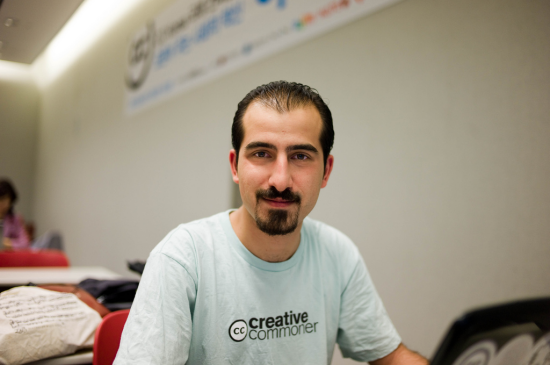
    Damascus — Tuesday, 3 July 2012 – Today marks the launch of the #FREEBASSEL campaign to bring about the release of Bassel Khartabil, known widely on the Internet and in technology communities as Bassel Safadi. Bassel is a resident of Damascus, Syria, a technology pioneer and respected community leader. He is a loving family member and friend to countless people at home and around the world. He has been detained since March 15, 2012, without trial. Today the campaign learned Bassel is being held at security detention branch 291 in Kafer Sousa, a facility that was uncovered in the recent Human Rights Watch report “Syria: Torture Centers Revealed.”

    The #FREEBASSEL campaign launched today by releasing a letter signed by leading supporters and organizations that Bassel has worked with for some time including support from Joi Ito, Chaiman of the Board for Creative Commons, Lawrence Lessig, Harvard Law School Professor, Jimmy Wales, and already 577 others from around the world who have signed a letter of support to #FREEBASSEL. The letter is directed at the Syrian Government, people living in Syria, Internet citizens and related diplomats worldwide with the goal to raise awareness about Bassel’s situation to see him free once more.

    The letter reads:

    To Whom it May Concern:

    On March 15, 2012, Bassel Khartabil was detained in a wave of arrests in the Mazzeh district of Damascus. Since then, his family has received no official explanation for his detention or information regarding his whereabouts. However, his family has recently learned from previous detainees at the security branch of Kafer Sousa, Damascus, that Bassel is being held at this location known as branch 291.

    Bassel Khartabil, a Palestinian-Syrian, 31, is a respected computer engineer specializing in open source software development, the type of contributions the Internet is built upon. He launched his career ten years ago in Syria, working as a technical director for a number of local companies on cultural projects like restoring Palmyra and Forward Syria Magazine.

    Since then, Bassel has become known worldwide for his strong commitment to the open web, teaching others about technology, and contributing his experience freely to help the world. Bassel is the project leader for an open source web software called Aiki Framework. He is well known in online technical communities as a dedicated volunteer to major Internet projects like Creative Commons (www.creativecommons.org), Mozilla Firefox (www.mozilla.org), Wikipedia (www.wikipedia.org), Open Clip Art Library (www.openclipart.org), Fabricatorz (www.fabricatorz.com), and Sharism (www.sharism.org). Since his arrest, Bassel’s valuable volunteer work, both in Syria and around the world, has been stopped. His absence has been painful for the communities that depend on him. In addition, his family, and his fiancée whom he was due to marry this past April, have had their lives put on hold.

    Bassel Khartabil has been unjustly detained for nearly four months without trial or any legal charges being brought against him.

    We, the signees of the #FREEBASSEL campaign, demand immediate information regarding his detention, health, and psychological state.

    We urge the Syrian Government to release the community member, husband-to-be, son to a mother and father, and celebrated International software engineer Bassel Khartabil, immediately.

    For More Information

    http://freebassel.org

    http://twitter.com/freebassel

    http://facebook.com/FreeBasselSafadi

    ● Please use the #freebassel hashtag in social media.

    ● Image of Bassel: http://www.flickr.com/photos/joi/4670781482/sizes/l/in/photostream/ by Joi Ito (Creative Commons Attribution 3.0 licensed).

    Background References

    ● Syria: Torture Centers Revealed. Human Rights Watch. http://www.hrw.org/news/2012/07/03/syria-torture-centers-revealed. Accessed 3 July 2012.

    ● Torture Archipelago: Arbitrary Arrests, Torture, and Enforced Disappearances in Syria’s Underground Prisons since March 2011. http://www.hrw.org/reports/2012/07/03/torture-archipelago-0. Accessed 3 July 2012.

    About #FREEBASSEL

    #FREEBASSEL is a campaign to bring about the safe and immediate release of Bassel Khartabil from wrongful detainment in Syria since March 2012. He is a well known contributor to global software and culture communities like Creative Commons, Mozilla Firefox, Wikipedia, Open Clip Art Library,
    Fabricatorz, and Sharism. He is missed by these communities, his family, friends and loved ones. The campaign says, “We will not stop campaigning for him until we see him as a free global citizen once again.”

    Contact

    ● info@freebassel.org

    ¶¶¶¶¶

    ¶¶¶¶¶

    ¶¶¶¶¶

    ¶¶¶¶¶

  • SOMArts Cultural Center and The San Francisco Foundation present a focused look at the future of the Bay Area visual and media arts landscape, September 4–October 2, 2012. The Annual Murphy and Cadogan Contemporary Art Awards Exhibition showcases the work of promising visual artists from regional Masters in Fine Arts (MFA) programs working across disciplines and identifies young artists whose work connects directly to the pulse of emerging trends.

    Below, check out videos of previous award recipients!

    All of the above information and embedded videos are provided courtesy of SOMArts Cultural Center.

    ¶¶¶¶¶

    ¶¶¶¶¶

    ¶¶¶¶¶

    ¶¶¶¶¶

  • This slideshow requires JavaScript.

    Here are some of the photos I took on my walk through of the Jean Paul Gaultier exhibition at the De Young Museum. I walked away thinking the following: A) I think I would fumble all over my words if I met Jean Paul Gaultier, B) I will never look at fiber optics, wire, actual film strips, ribbon, lace, leather, and vinyl the same way ever again (THIS is a good thing), C) I want to meet the curator and theater company that helped produce the exhibition, D) next time, I will be taking a day off from work to go to a high-profile exhibition, and E) any exhibition at a major museum on a Saturday is like being on a crowded train. Enjoy the photos AND if you checked out the show, please feel free to leave comments and share your experience!! 🙂

    ¶¶¶¶¶

    ¶¶¶¶¶

    ¶¶¶¶¶

    ¶¶¶¶¶

  • Click on the image above to donate to their Kickstarter campaign!


    Film, especially documentary films, have always captivated my attention. Over the years, I’ve seen some amazing experimental film and video art works that had me wanting to support this particular art form at every opportunity. When I learned about the Free Form Film Festival (FFFF) and viewed some of the works from previous years, I was impressed with the caliber and the quality of the concepts. Co-founders, Tyrone Davies and Ryan Wylie have been running the FFFF)for over 10 years! I had the opportunity to catch up with Tyrone for some Q & A. Check out what he had to say and learn more about the festival!!


    *          *          *          *

    What was the impetus for the Free Form Film Festival (FFFF)?

    FFFF came out of a desire to screen films that most festivals do not screen. Ryan and I were realizing how few venues there were for genre-defying work. It seems like every fest has a box hey want to put you in. If you don’t fit, you don’t get shown. We thought there should be more festivals (I still can’t think of one) that were truly open to all forms, genres, lengths etc.

    How did you get the name Free Form Film Festival (FFFF)?

    The name Free Form Film Festival comes directly from our mission – to curate works challenging standard “form” or are even free of preconceptions about form and genre.

    What is the difference between FFFF and other film festivals? Since FFFF has been happening for over the past 10 years, what was the motivation for you and Ryan to expand and start fundraising at this point? 

    Since we are often considered to be an experimental film festival, we don’t seem to get as many narratives or documentaries submitted to us. But our aim is to show anything we consider to be innovative. We aim to be as eclectic as possible. We value the cross-pollination of ideas as well. I feel this is pretty unique. As time goes on, our concept of what a film is has expanded. There’s a lot of video art and other media art that is repetitive or has no real “end” so that work is hard to show to an audience. But we have made adjustments in some cases with multiple screens, or curating segments from larger works. Even though we can’t do all the things a gallery can do, we try to adjust for exciting content regardless of the form it takes.

    As for the fundraising, we have a lot of reasons. The biggest financial concern entails hosting the visiting filmmakers who show their work and lecture. We want to elevate the festival by bringing in known makers. This year, I was able to secure funds to bring Bay Area makers, Mike Kuchar, Craig Baldwin, Jennifer Kroot, and Jamie Meltzer to Denver to show and discuss their films in person! This was a one-time thing that only affected Denver, but it was great. The Kickstater funding can do this in San Francisco and Salt Lake City. The other big thing is that some (not all) of our shows are free. The films with a modest fee still accrue production costs. We could use the flexibility. Also, we are working on some web development for our site but that is minimal. The main reason for the money is visiting lecturers in the three cities – San Francisco, Salt Lake City, and Denver!!

    What are you hoping will happen with FFFF? Do you want this to travel to other cities? Will FFFF have a base city? 

    After all the travel we have already done, we want to put down some roots. Right now, it seems like Denver, San Francisco, and Salt Lake City are the best choices. In the long run, we will definitely stay in San Francisco. We will always do some shows in less likely locations too but we don’t intend to keep traveling the way we once did. It’s just too difficult to do this and you can’t build audiences as easily. Again, this is why we are fundraising. We want to help bring artists to meet the community.

    For those interested in submitting work for consideration to FFFF, what are you and Ryan looking for during the submission and deliberation process?

    For submissions, we want people to send us work that is thoughtful and innovative. We don’t care if it’s a narrative, a documentary, an experimental film, video art, or anything else. We look for work that is conceptually strong.

    *          *          *          *

    Below, is Brian Dewan’s, King of Instrument short film was featured in the past at the Free Form Film Festival (FFFF)


    ¶¶¶¶¶

    ¶¶¶¶¶

    ¶¶¶¶¶

    ¶¶¶¶¶

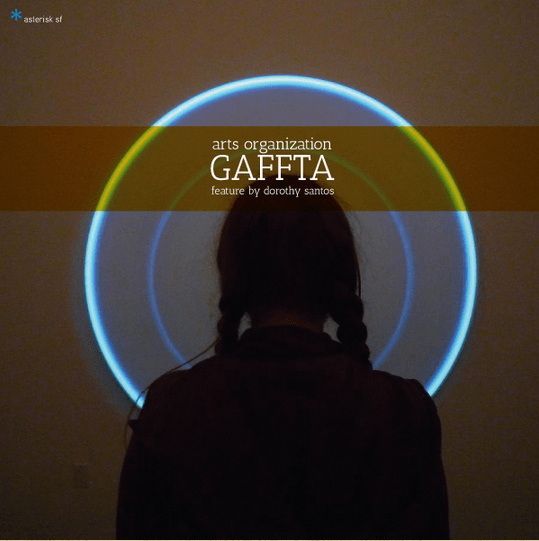
  • Asterisk Arts Organization feature on Gray Area Foundation for the Arts (GAFFTA)

    On San Francisco’s bustling, highly trafficked Market Street, the organization Gray Area Foundation for the Arts (GAFFTA), is changing the face of arts and technology in a significant and dramatic way. Seeing a lack of representation in the digital arts movement accompanied by a profound interest in creating a space where such art could be seen, founder and Executive Director Josette Melchor created the nonprofit in 2009 in the midst of a financial crisis. Despite the downturn in the economy, Melchor dedicated her efforts to creating a space for both aspiring and established artists and creative technologists. From interactive artworks and data visualization to creative coding, this organization has become one of the most prominent spaces for arts and technology, fostering change and innovation not only regionally, but also internationally.

    At its core, Gray Area works with established artists such as Aaron Koblin and Camille Utterback to expose the public to software-based works that are both interactive and immersive through various tools of technology, such as programming, coding and data visualization. Integrating audio- and sensory-based controls, the works you might experience at a GAFFTA exhibition or event undoubtedly showcase most ingenious and experimental uses of programming technology and how contemporary art is created. Even donations to Gray Area have been made into a work of art. The nationally recognized and award-winning work Seaquence is a virtual art piece intertwined with a participatory aspect where donors are given a gift in return: a musical life form. Resident artists Ryan Alexander, Gabriel Dunne and Daniel Massey co-created this interactive music platform, forming multifaceted art to dynamically and physically enable donors to see their contributions transform within a virtual environment, thus becoming part of an even larger visual- and music-based system. Gray Area artists, technologists and faculty are constantly forging radical new ways to bring the community into the creation and discussion of the work. Although the organization can easily boast its tremendous creative talent, the exceptionally skilled faculty aims to teach novice technologists within the community both technical and artistic skills such as programming and electronics. The goal is to draw different sets of curious minds into the discussion and progression, bridging the gaps between arts and technology.

    Gray Area is particularly well known for weekend events called hack-a-thons, which gather creative professionals across multiple disciplines such as art, engineering, education, architecture, journalism and writing. These events facilitate the creation of mobile applications, with objectives such as fostering transparent communication between citizens and government officials. Hack-a-thon participants also produce conceptual artworks that transform public data into visually dynamic pieces. More recently, the nonprofit was awarded a $100,000 grant by the National Endowment for the Arts to put toward the implementation of a National Data Canvas Project. According to Gray Area, “The project will distribute data-driven art in urban environments across the United States and will include a mobile application for public use. Utilizing data.gov, the project will allow the general public an enjoyable and engaging way to discover new information through artistic data visualization and interactivity.” Essentially, the project will allow for artists, designers and developers across the nation to create works in their own region based on creative coding assembled by the San Francisco–based Gray Area team.

    Situated in San Francisco’s Tenderloin, Gray Area wanted to take part in the overall revitalization of the neighborhood by bringing some the city’s brightest creative talent to the district to assist in affecting change. As this center takes on even more demanding and worthwhile projects, there is one particular initiative that is both notable and eye-opening. The Creative Currency: New Tools for a New Economy is the latest initiative seeking to bring community leaders and organizers, politicians, artists and technology professionals together to affect change within a community with their collective skills.

    Originally published and posted to Asterisk SF Magazine, please click here to view

    ¶¶¶¶¶

    ¶¶¶¶¶

    ¶¶¶¶¶

    ¶¶¶¶¶

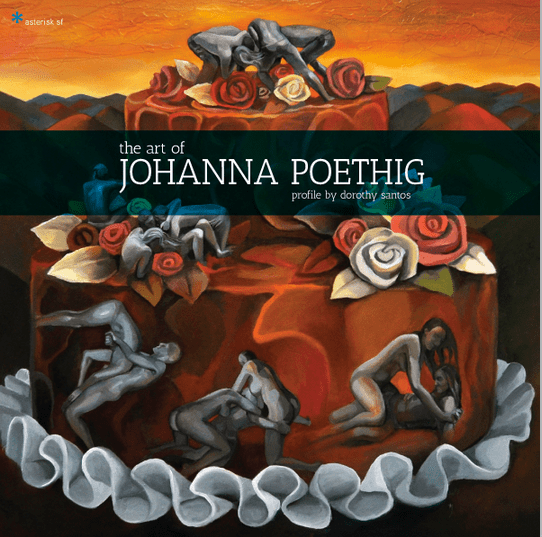
  • Johanna Poethig
    Johanna Poethig, Artist Feature in Asterisk SF Magazine

    Imagine a bright-blue-eyed four-month-old baby girl traveling with missionaries to the Philippines. Picture her growing up and attending an alternative school in Manila filled with many friends who encourage her to engage in the vibrant art community. In her teenage years, she returns to the United States to learn as much about muralism as possible in Chicago, later venturing to the West Coast and settling in the Bay Area. Now, this is not romanticized fiction. It is the colorful and extraordinary life of artist Johanna Poethig. With over 25 years of experience spanning public art projects, murals, installation, performance and video, Poethig remains a prominent female figure in contemporary muralism.

    During her early adult years spent in Chicago, she was inspired and mentored by well-known muralist William Walker. After spending time learning about the history and significance of muralism, Poethig was determined to make a career of the discipline. She thought back to her days in Manila and yearned for familiarity; her desire to reach a larger Filipino community is actually what brought her to the Bay Area. But over the years, she faced setbacks. Among these challenges, she was forced to navigate building permits and policies, changes in building ownership, and even her murals being painted over.

    Yet Poethig remained determined to create artworks in public space. “I always saw mural practice as a way to do community art or social practice. You have these huge canvases! Not only is it a way to do something for a community, but it is fun as a painter to learn about history and to put it out there for the people,” she says. Despite teachers and professors discouraging her from becoming a muralist, she was steadfast in her passion and knew that San Francisco’s strong mural movement would help solidify her goals. One of the most interesting aspects of murals is the unpredictable nature and politics that go into their conservation and preservation. New media efforts are constantly being developed to address digitization of public artworks. As Poethig explains, “There’s nothing that takes away from the material and paint, but new technologies are new technologies, and I’m grateful that there is a solution to preserving the image and the idea of the image. … If it’s a new-media projection, it’s a good thing. It’s all about occupation of public space and who is going to occupy it.“

    “In my mind, being a muralist is extremely important to do. Otherwise, all of our big spaceswould be taken up by advertising, and that would be a travesty to have all of our big, best walls in the city be advertisements. The more public space where creative artistic images can be placed, where the space is not about commodity, consumerism or trying to sell you something, is a victory but it’s difficult to do.”

    Art in public space is not just a physical marker. It places an individual within a specific location and provides a rich context of the environment, the people and the culture within that space. On sunny days, native San Franciscans and tourists alike flock to the vibrant murals of the Mission District, yet many historic and iconic public works—from the I-Hotel mural in North Beach to the Statue of Liberty mural on the side of the South of Market Multi-Service Center—tell the stories of San Francisco history. Poethig’s work tells these stories of San Francisco history, proving her continued importance in the Bay Area mural and visual arts movement. Her work speaks fervently about what it means to actually be present and aware of one’s community. It encapsulates a strong desire to draw, quite literally, people into public space in a way that makes them question their experiences and reflect on their own histories.

    Originally published and posted to Asterisk SF Magazine, please click here to view

    ¶¶¶¶¶

    ¶¶¶¶¶

    ¶¶¶¶¶

    ¶¶¶¶¶

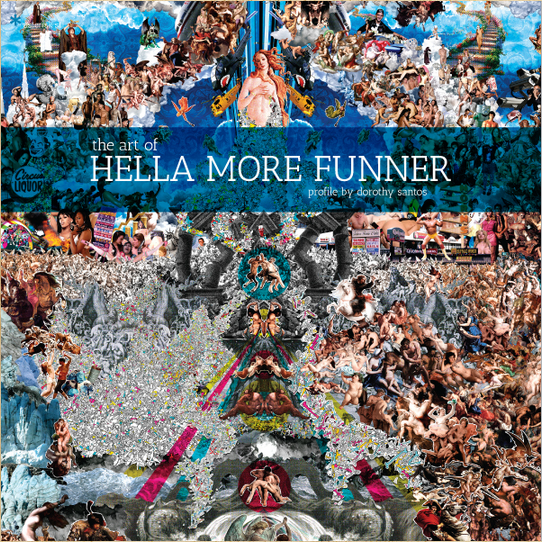
  • Hella More Funner, Artist Feature in Asterisk SF Magazine

    Information overload is all too common with today’s readily accessible images, text, and video. Even language reveals our dependence on the Internet, with the word google not only referring to a company but also being used as a verb in lieu of search. The Internet and social media have become ubiquitous in our daily routines. Need an image of a dog? A cat? Or how about a dog holding a cat? You will probably find what you’re looking for. As a matter of fact, you will probably find over 1 million images and more.

    Ask artists Sam Fuchs and Adam Gray— commonly known by their moniker, Hella More Funner—about this deluge of images. The art duo has incorporated this constant stream of communication, imaging searching, indexing and everything we feed the Internet as fodder, inspiration and the basis for their large-scale collages. The resulting artwork looks at the current generation and how it’s inundated by data, immediacy, gratification and a voyeuristic obsession of viewing ourselves and others.

    Since 2007, Hella More Funner has created works based on re-appropriated imagery of culture. When asked about their studio practice and creative process behind their artworks, they noted, “Obsessiveness is the key; we are connoisseurs of Google Image search, aficionados of Flickr and buffs of Wikimedia Commons. We copy and cut and compose images by the thousands without concerning ourselves with trivialities such as the subject’s historical origins, owner attribution, or a perfect and direct connection to the theme of the piece. And it’s not just us. Our process reflects our peers. … We start with an idea, decide on categories of images that relate to that theme, and build an archive. The archive serves as a trail of breadcrumbs for us and building blocks for the collage.”

    As visual archaeologists, they showcase our relationship to popular culture through large-scale works such as “Cielo” or “Beachy Head,” which entice the viewer with bright and audacious colors. Standing in front of one their works, it is easy to find one familiar image after another. Even with unfamiliar images, the massive collection of photos meshes and blurs together to create what looks like a mythical creature, being, or landscape. Much like our own experiences in sifting through email messages or virtually stumbling and clicking on morning headlines, Hella More Funner has taken familiar behavior and created collections for the viewer. The longer we look, the more we realize the amount of information we take in, and it may lead to a sense of anxiety and angst. Either way, the work provokes the viewer to perceive far more than the tiny images that make up the whole.

    Whether the work appears as a meditation or effrontery to the senses, Fuchs and Gray show what they have coined as a “garbage culture.” The collective defines this particular phrase as “anything that serves to distract or delay any real and unmediated experience—a connection with another person, for example. It is in everything that promises happiness and youth, every product that promises the bikini babe, every ripped athlete selling a cheeseburger. Garbage! You know it when you see it.”

    However, is the viewer able to give up looking at some point? Hella More Funner’s phenomenal, meticulous, and labor-intensive compositions aim to make contemporary art, well, hella more funner. At first glance, the works may be more than you can visually handle but, let’s face it, you know you want the cute kittens, the six-pack abs, the beautiful women, football players dancing in clouds, dolphins midflight, rain-soaked flowers, and angels fighting demons, because it’s all present and ready for consumption. It’s all there for you and your viewing pleasure.

    Originally published and posted to Asterisk SF Magazine, please click here

    ¶¶¶¶¶

    ¶¶¶¶¶

    ¶¶¶¶¶

    ¶¶¶¶¶

  • Artist Feature on Jonathan Barcan in Asterisk SF Magazine

    At Workspace Studios off Folsom Street, visitors can expect a breathy climb up brick-colored stairs to a maze of artist studios. One of those studios belongs to artist Jonathan Barcan, who during a studio visit shared insights on his printmaking, drawing and painting practice. In looking at his work, it is easy to see the precision that goes into his etchings and prints as well as the experimentation and the unpredictability of materials in his drawings and paintings. Organic materials such as wine, spices, sand and metal form beautifully articulated lines and figures. Although his Master of Fine Arts from the State University of New York at Buffalo afforded him opportunities to exhibit work in Philadelphia, Beijing, Montreal, Toronto, and Florence, San Francisco is home.

    Using physics, science, the natural world, and the notion of the human soul as inspirations for his art, Barcan has a highly meditative quality to his work. His prints serve as observations of and responses to our contemporary world, combining older technologies such as printmaking with more modern sciences and digital advances, all in an effort to identify people’s relationships to society and culture. As a longtime printmaker, Barcan works diligently toward understanding the unexpected nature of the craft and its medium. Working with acids and metal surfaces is no simple task, yet his works comprise natural lines, organic forms, and fluid motions that seem impossible to replicate. From colorful to monochromatic pieces, his work envelops the viewer in an imaginary space where words are unable to express the breadth of the human experience.

    “We are clearly becoming other types of people because of the rapid rate of technological progression. We understand information and the substance of a person so much differently than we did 100 years ago,” says Barcan.

    His specific visual language includes erratic, bold, non-tentative lines that aim at investigating human intricacies and understanding humanity at the intersections of art, technology, and science. Despite the depth of content, his images become familiar and accessible to the viewer. “It’s seductive,” he says of drawing. “It is so important for me to show the artist’s hand in my work. I like the messiness. When fingerprints and dirt on the paper show, there is a history. There’s also a tension in the drawings. I also like to observe people. For me, the drawings are the easiest way for me to communicate my observations. It’s immediate, in some ways. But the seductive quality comes from convincing people the work is immediate, but that’s not true. There is a lot of work and rework that takes time. The seductive part also comes from how people project how I make these things and me knowing the actuality of the creation.” His work is dynamic, connected and provocative. It inspires introspection in its dealings with the separation, integration and presence of the soul or the self within society and culture. With the swarm of interactive devices, data streams and codes that riddle our transactions, books, magazines and billboards, the artist and his physical work are rare but imperative. Despite the multiplicity of subjects in Barcan’s work, each is unique, much like the smudges and fingerprints of the artist’s hand. His work serves as a meditation, both on how we live and what we choose to leave behind.

    Originally published and posted to Asterisk SF Magazine, please click here to view

    ¶¶¶¶¶

    ¶¶¶¶¶

    ¶¶¶¶¶

    ¶¶¶¶¶

  • Found this image on the net! Pardon the poor quality. I figured, if I were an actual bee, this is what I might look like, yes?

    Wow, that is some powerful imagery, eh?

    It’s true. I’ve been so swamped with work, both professionally and personally. The hectic schedule between my 9-5 and all the writing assignments has really taught me to manage my time well, organize, mobilize, and learn how to say ‘no’ to certain things. A few quick updates:

    • The Asterisk SF Art & Design Issue is available! Many sleepless nights but it was all worth it. It was a tremendous learning experience and helping artists gain more exposure was a great benefit of the overall work.
    • Blogging regularly for Gray Area Foundation for the Arts (GAFFTA)! I have volunteered with this organization for some time and its been wonderful to see and experience all the great things happening with this organization. It’s even more awesome meeting and corresponding with GAFFTA faculty who teach artists, musicians, and creative technologists a multitude of skills from programming to creative coding to integrating older and newer technologies (i.e., paper-based electronics!! Watch out for that post on the GAFFTA blog!). 
    • Still blogging with ZERO1 and anticipating the ZERO1 biennial!! The biennial will be from September to December 2012 and with so many amazing artists on the roster and pop-up exhibitions throughout the Bay Area, I’m really excited to write profiles for some of the biennial artists!! I won’t reveal them just yet BUT they’re doing some phenomenal things in arts and technology!!! Most importantly, I’m looking forward to facilitating a blogging workshop with ZERO1 art ambassadors. They are a young and talented bunch that will be covering the biennial events and festivities. It will be great working with them and seeing arts and technology through their eyes and perspectives.
    • Still working hard on all fronts BUT the greatest test will start in Septemeber…graduate school! Yup, you’re probably thinking, “Damn, this woman is crazy”. Well, yeah, you’re right. I’m one of those people who likes being busy BUT it’s time. I’m excited, anxious, nervous, and happy that I will be starting this new chapter in my life. Talk about “hit-the-ground-runnning”! I know, I’m filled with clichés. Horrible. I know but they’re easy and get straight to the point.

    All right, if you have read this far…THANK YOU! Looking forward to the next few months and what will happen during the rest of the year. I’m curious, do you have something to share or ask? Well, drop me a line and let me know!! Thanks again for reading and your support!! Definitely means a lot. 🙂

    ¶¶¶¶¶

    ¶¶¶¶¶

    ¶¶¶¶¶

    ¶¶¶¶¶