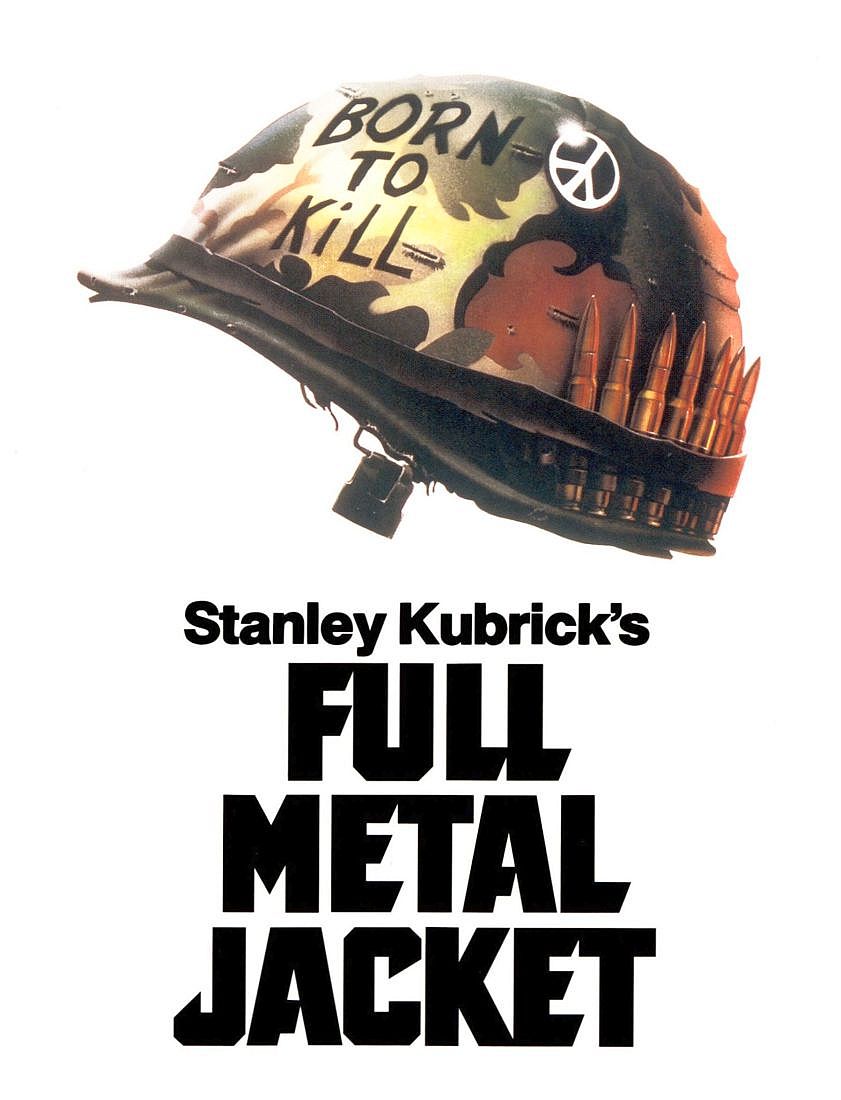
Last weekend, I watched Full Metal Jacket. Being a huge fan of Stanley Kubrick and a sucker for a well done war film, the movie was phenomenal. Naturally, I thought of the various ways war has been depicted in the visual and new media arts. Admittedly, I’m not huge fan of political art; HOWEVER, when it’s done well, it can be powerful and truly engaging. From visual to performative, the artists below have created some of the most memorable pieces.
* * * *
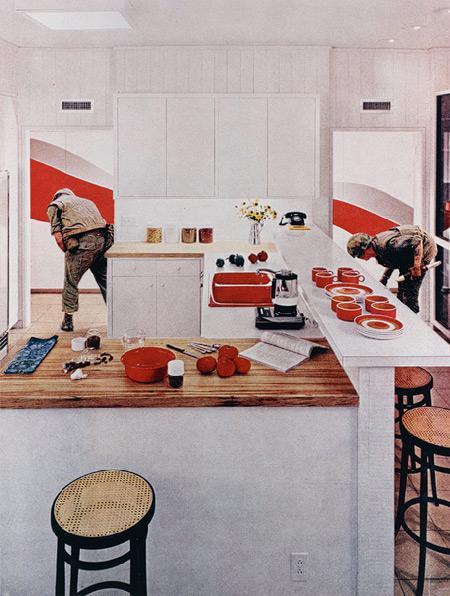
During a Feminism & the Arts course, I studied Martha Rosler‘s photo montage works of the Vietnam war.
Artist: Martha Rosler | Title: red stripe kitchen (Part of ‘Bringing the War Home’ Series) | photo montage | 1967-1972
Currently in draft mode, I’m working on a zer01 piece on new media art that serves as both political and social commentary. One of the artists I’m looking at is Joseph DeLappe and his work, ‘dead-in-Iraq’.
The conceptual work of Chris Burden possesses an extraordinary and rather dangerous level of self-sacrifice that works extremely well. His work STILL gives me chills. Talk about physicality and gesture – his work is all about that.
Art collectives epitomize the adage, ‘Power in Numbers’, and the Tool Shed Days is a collaborative effort that created the interactive piece, ‘Befriend a Recruiter’. Please watch the video and share your reflections. Again, I am working on a piece and will be discussing them a bit more in detail…In the interim, I would love to hear what you think – positive, negative, or indifferent.
Click on the image above to learn more about the GAFFTA event!
Unfortunately, I am unable to make this event BUT for those of you that can, please do!!! It will be informative and engaging. Trust me! Again, please click on the image above for more details.
I can’t help it. I adore Carissa Potter. As a matter of fact, I have nice things to say about her here. Hope you clicked on ‘here’ and read about her…this post will definitely be here when you get back. 🙂
Aptekar explores 3-dimensionality with stacks of laser-cut paperboard. Her laser-cut sculpture-objects show no evidence of the artist’s hand. First designed as virtual 3D objects in CAD software, and then translated into 2D layers of laser-cut bristol board that the artist stacks, the emphasis is on clean design and perfect, machine-executed manufacture. The effect is a sculpting of space.*
Opening Reception: Friday, August 12, 2011 7-10PM Exhibition Dates: August 12 – September 24, 2011 Gallery Hours: Friday – Saturday 12pm – 5pm
Yes, folks, I still love painting and I still write about artists who use traditional methods. I wanted to give you a little taste of what’s to come. I’m currently working on an article about Bay Area artist, Aaron Nagel. I had the pleasure of sitting down with him to discuss his art and practice BUT here’s a great video from the Warholian. Enjoy!
Being a volunteer at Gray Area Foundation for the Arts has given me access to some amazing resources. It’s been both an enriching and engaging experience. I’ve met some of the most creative minds (ever) volunteering and one of the latest ventures involves Processing.
At first, there was a fair bit of trepidation taking the Processing 101 class. I have never programmed or coded before but I wanted to get a glimpse into the creative side of it. Since many of the artists I research have utilized some form of new media, in particular, creative coding and computational design, I figured I would immerse myself in the technology that serves as their medium. However, I have to admit, it wasn’t a great feeling introducing myself in class. It was intimidating. Going around the circle and introducing ourselves and realizing my classmates were either a) an interactive designer, b) a programmer, c) a design + technology educator, or d) an engineer! What tha?! The inner monologue was definitely thinking, “Ummm, I thought this was a 101 class!”. However, being the only art writer there and sharing my purpose, which was to learn a thing or two about processing and how new media artists use creative coding to better inform my writing piqued some folks interest and that was welcoming, indeed.
What have I learned after this week’s Processing classes?
Beautiful art can be done with Processing
Processing allows for two things: 1) creative outlet and 2) a place to practice your problem solving skills
Processing/Coding takes A LOT of practice: Yes, you’re using language to process and tell the computer what you want it to do but it’s the way in which you execute commands and all of the little details but it’s rather addictive!
Overall, Processing has been a great way for me to learn more about new media arts and the technology that helps artists extrapolate abstract ideas. Below are some of the artists that have used Processing to create some cutting edge art…
Below, you will find a video of Berlin based Information Designer, Stephan Thiel, and how he created a data visualization of Shakespeare’s work. It’s such an innovate approach at viewing how one reads and understands narrative. It’s also an incredible method of investigating reading habits and commonly used words within Shakespeare’s texts. Fascinating! To learn more about the project, please click here.
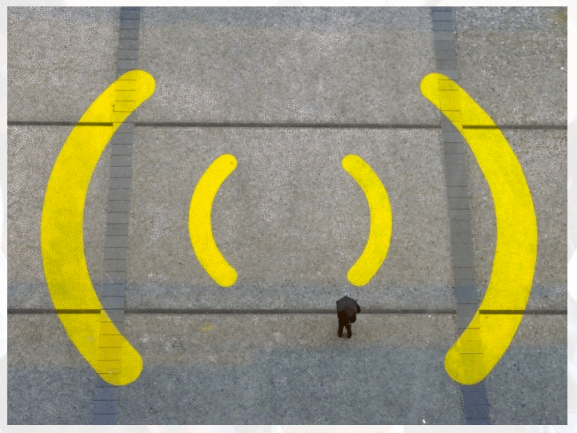
How about interactive installation done by artist, Niklas Roy? Roy uses a Surveillance camera, computer vision, and a motorized curtain to create some “privacy”. It is one of the most ingenious art installations that uses Processing I’ve seen thus far. One of the great things about interactive art and design is its engagement with an observer. In this case, the most curious onlooker completes the work. I highly recommend visiting his site!! His work is beyond awesome. Seriously.
We live in a world where there is more and more information, and less and less meaning.
~ Jean Baudrillard
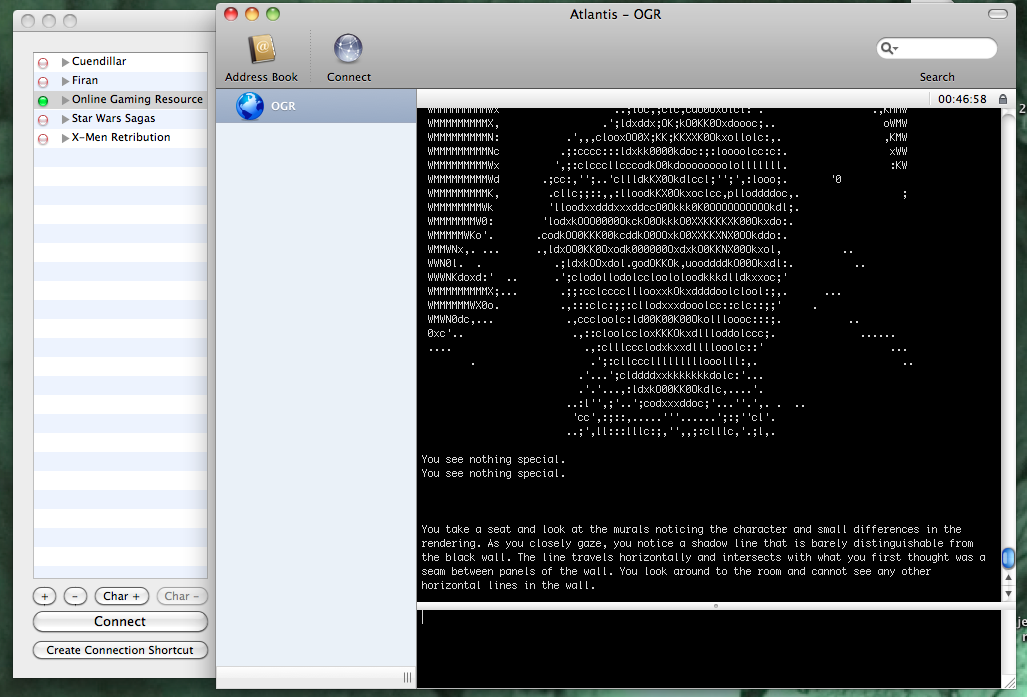
In the era of Atari and Apple monochrome computers, the layperson was limited to simple data processing and a nice game of Pong. For the more engaged end user, technology possessed a winsome quality. Virtual environments were once considered new media and presented innovative approaches at understanding and connecting with the world. Within these environments, language was a key component in establishing such venues for social networking. The worlds of Massively Multiplayer Online [Game] (MMO), Multi-User Shared Hack (MUSH), and Multi-User Dungeon (MUD)s explored methods of intersecting game play, creativity, and technology that offered an enriched virtual experience. Contemporaneously, the image reigns and the sense of sight is predominant in mainstream applications. Ironically, in today’s art world, many of the physical artworks one’s sees and experiences are derived from concept and involve far less retinal sensation. With mainstream technology aimed more towards convenience, individuals continue to hold onto deep seeded beliefs of what art ought to be, which entails an adherence to art’s physical reality (i.e., visiting a museum or a gallery). For the hybrid artist/technologists, the Ars Virtua exhibition, look art, returns to language as a means of exploring how art, technology, and philosophy interface to create highly conceptual and thought provoking work.
Artists Thomas Asmuth, Alejandro Duque, and Christopher Poff re-purposed programming language and older computational methods to provide a nostalgic look at previously used platforms. Gaming and simulated environments are constantly evolving and highly sophisticated. Yet, the foundational language remains the same. Looking at Sol Lewitt’s work as a source of inspiration, Asmuth created portraits using American Standard Code for Information Interchange (ASCII) language along with photo processing. Language plays an integral role with the end user’s experience and immersion within a simulated environment.
Artist: Alejandro Duque
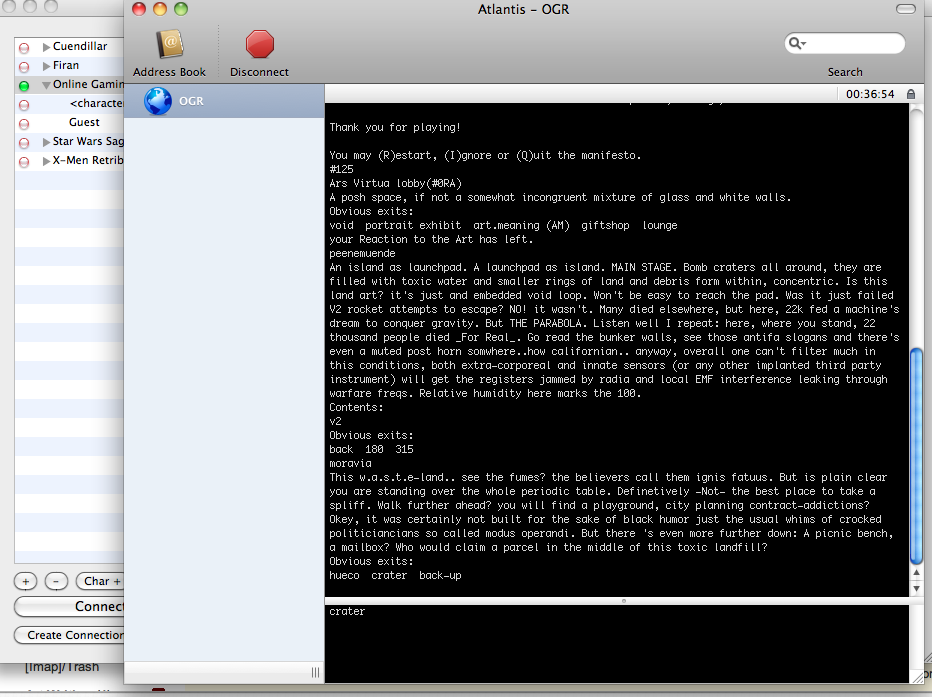
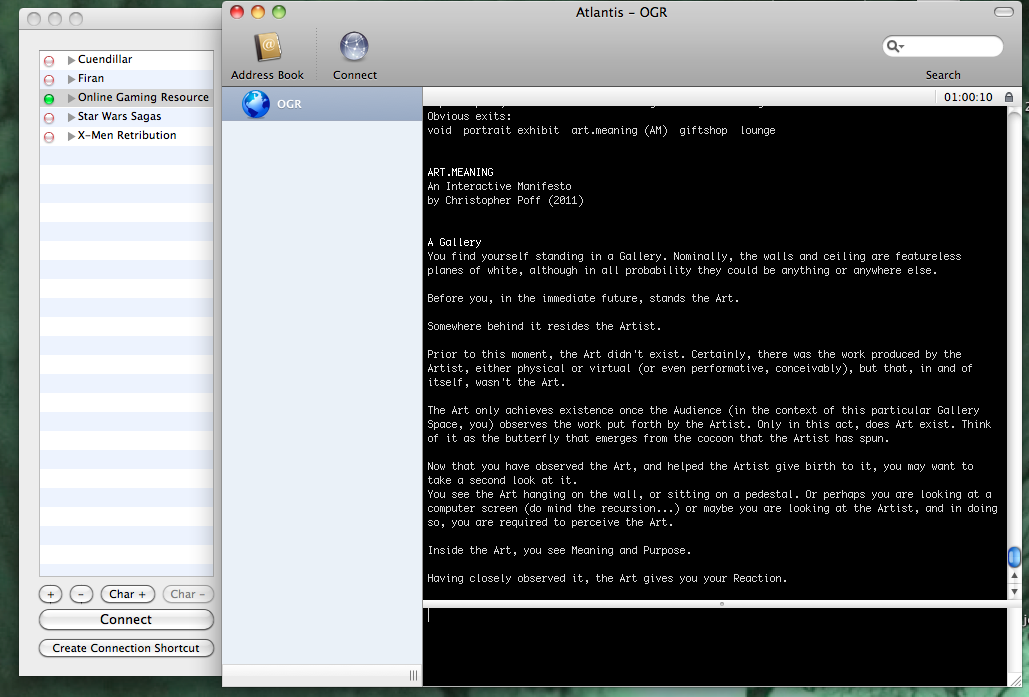
Similarly, Duque’s work reflects how one builds within a Multi-Shared Hallucination or Hack (MUSH). His virtual environment allows users to create stories based on their command choice. Christopher Poff’s work, Art.Meaning (AM), necessitates a participatory discourse on the philosophy of art with a similar multi-user interface. The game requires commands be entered into the game environment to run subsequent text. Sample text from the Art.Meaning (AM) manifesto appears as follows:
Prior to this moment, the Art didn’t exist. Certainly, there was the work produced by the Artist, either physical or virtual (or even performative, conceivably), but that, in and of itself, wasn’t the Art.
The Art only achieves existence once the Audience (in the context of this particular Gallery space, you) observes the work put forth by the Artist. Only in this act, does Art exist. Think of it as the butterfly that emerges from the cocoon that the Artist has spun.
Artist: Christopher Poff
His use of language is curated well into the look art showcase along with Asmuth and Duque. All three artists/technologists use the MMO/MUSH/MUD environments to represent the various forms of concept and image creation (from representational to imagined). The exhibition is a reminder that the rich colors and dynamic graphics of contemporary design and media are visual products of language. look art challenges and elicits this much needed discourse. As Ars Virtua Director, James Morgan, states, “Asmuth creates “objects,” Poff creates an experience, and Duque creates an environment or space.” The artist trifecta gives the viewer new ways to look at how old technologies and explore art in an unorthodox and engaging way.
Originally posted to zer01 blog, please click here to view







 Dorothy R. Santos, Ph.D.