• This cartoon about blogging was originally published in the New Yorker in 2005 and created by Alex Gregory. Think about that…2005. Blogging has been around for decades though. Technology moves fast and I’m sure many of you weren’t on the internet as much in 2005 (or maybe you were, tech folks, obviously, but my mother – not as much). I’m not going to get into the technical history on this post but you can check out this CNET news article here with a pretty nifty timeline.

    I’m writing about this topic because I read a blog posting about, well, you guessed it, blogging, written by Barbara Jane Reyes (BJR) – phenomenal writer! She discusses reader engagement and the deluge of social networking sites (i.e., Twitter, Facebook, Google+, etc.) and its effect on the blogosphere. Let’s face it…everyone in the world can have a blog (of course, it becomes a question of accessibility) BUT the desire and motivation to produce content is a complete different story. From poetry to fashion to food to art to gossip to fiction/non-fiction, there’s a blog for anyone and everyone interested in something. BJR writes,

    I am experiencing a bit of nostalgia over his post, what it once was like in a space that I now complain daily is rife with noise, clutter, thoughtlessness and insincerity.

    The imagery that comes to mind is our own physical world. The physical world is glut with things we don’t need and discard, more so now than ever. These days, we have to navigate a virtual world as well. A world that is excessive and, perhaps, more confusing!! Although some folks don’t believe pumping out content on a daily basis is worth it, I decided to engage in the experience. I’ve been doing this Post a Day 2011 challenge through WordPress, which has its own advantages and disadvantages.

    Advantage: 1) Learning discipline, 2) reading (way more) and discovering new artists, art movements, and anything related to art that provokes me to write or post, 3) being mindful and posting content that parallels with my goals and aspirations – people, places, and ideas I want to study and research, 4) connecting with people all over the world (a German scholar contacted me about my work and photography, and 5) having my blog serve as my portfolio

    Disadvantage: People not reading or caring. More often than not, this can really dampen all of the advantages. 😦

    In talking to people about blogs they follow, many individuals have a tendency to follow blogs that deal with the following content: sex, fashion, gossip, and food (and sex, oh, I said that one already). They may not readily admit it but if you look at statistics online (i.e., followers to these sites/blogs), you will see for yourself. Trust me, not slamming ANY blogs with this type of content but merely pointing out that the content relates to the Physical/Physicality of being in the world? Let’s face it, I find Art ridiculously juicy and filled with so much intellectual, emotional, and psychological stimulation BUT I highly doubt people are re-tweeting or re-blogging my interpretation of Theodor Adorno‘s essay on ‘Society’ where he explains art as knowledge informing a society. People want to connect where they are at in a moment. They don’t want to put in the work to connect.

    And you know what?

    That’s OKAY with me. Being an art writer/blogger has a specific audience and I’m not going to cater or pander to folks. Over time, I’ve realized my blog needs to be a space that shows progress and not perfection (as my old guitar teacher has said). It really is about progress not perfection. It’s a virtual work space. MY work space. BJR states,

    As for myself, I just need to keep doing what I’m doing, writing to work out my work…having this blog be the space where I continue to process what needs processing, so I can continue to envision a project, write it to completion, see it through to publication and beyond.

    Agreed! I’m going to keep art writing and posting the things I love and hoping readers (who truly read) consider the things I’ve written and find themselves engaged…

    ¶¶¶¶¶

    ¶¶¶¶¶

    ¶¶¶¶¶

    ¶¶¶¶¶

  • Please view the Fast Company article here to learn more about these amazing visualizations created by artists, Cullen Miller (music), Nik Hanselmann (visuals), and Gray Area Foundation for the Arts (GAFFTA)! Being a GAFFTA volunteer, I get to work with these incredible minds!! 🙂

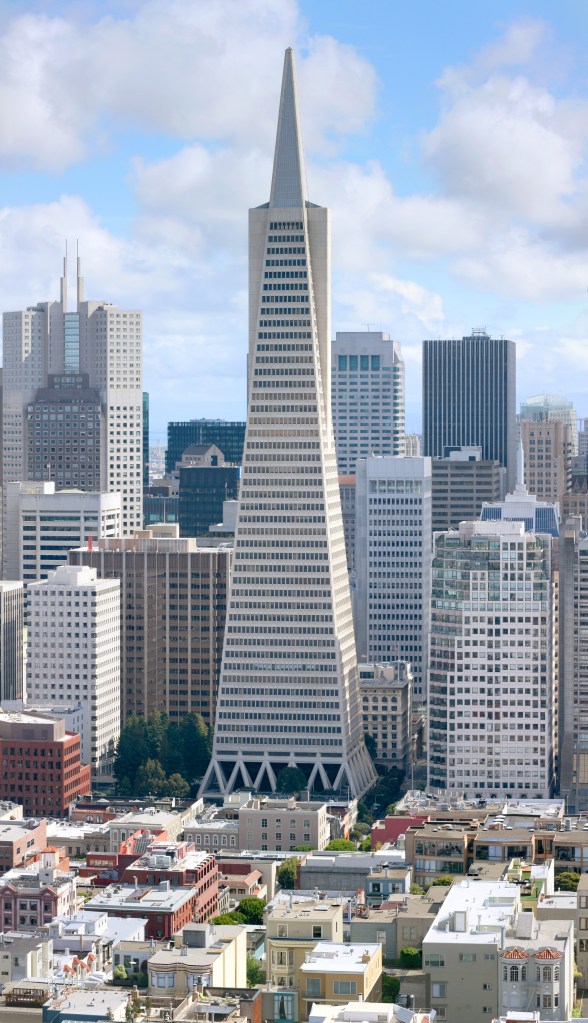
  • Photo from Wikipedia

    No joke.

    I’ve got some serious writer’s block the size of the Transamerica Pyramid building. It doesn’t help that I imagine a block of this size wedged into the Temporal lobe of my brain. Granted, this is all imaginary but my brain is feeling the effects of overuse at this very moment. Overall, it has been a great week and I had the opportunity to meet some smart, innovative minds while volunteering at the Summer of Smart event @ Gray Area Foundation for the Arts. Amongst the Smart folks, I met journalist and SF GovFresh blogger, Jessica Pearce and Artist/Technologist/Development Community Manager for Speek, Matt Nolan. I even wrapped up the weekend interviewing talented painter, Aaron Nagel (by the way, he paints portraits of female nudes that some of you may find NSFW, just letting you know now before you click on his name). Tonight, I’ve been immersing myself in Ars Virtua‘s latest virtual exhibition look art.

    The continual stream of information on art, new media arts, and looking at art history (modern and contemporary, as of late) and amassing all of this wonderful intellectual and visual information reminds me that I need to take a break every now and again. I’m feeling tired.

    There, I said it. This energizer bunny needs a boost.

    Fun fact: I don’t drink coffee (okay, fine, I drink tea but not everyday) and I don’t consume energy drinks. I really don’t want to resort to them either. All right, I’m going to attempt something relaxing tonight…

    ¶¶¶¶¶

    ¶¶¶¶¶

    ¶¶¶¶¶

    ¶¶¶¶¶

  • Over the weekend, I volunteered at the Summer of Smart (SoS) event held at Gray Area Foundation for the Arts (GAFFTA). It was the second hack-a-thon in a series of three. It’s an opportunity for community leaders, developers, designers, journalists, architects, engineers, and all creative types to innovate and affect change in the community. Very dynamic event!

    The view from the 5th floor of the Warfield building.

    The second half of the 48 hour SoS hack-a-thon. Teams coming together to put the finishing touches on their application ideas to help bring awareness to the San Francisco Community.

    More Smart folks hard at work!

    I had the opportunity meet and have a great conversation about arts and technology with Speek‘s Development Community Manager, Matt Nolan. What a great mind with some innovative ideas!

    The ComMUNIcation 3rrors Team developed an idea that would work similarly to Smartphone application, NextBus, iBART, iCommute BUT with more accurate transit information/data! Exciting!!

    ¶¶¶¶¶

    ¶¶¶¶¶

    ¶¶¶¶¶

    ¶¶¶¶¶

  • If you’re a performance and/or sound artist, please download the PDF of the Micromanagement Deadline Memo here.

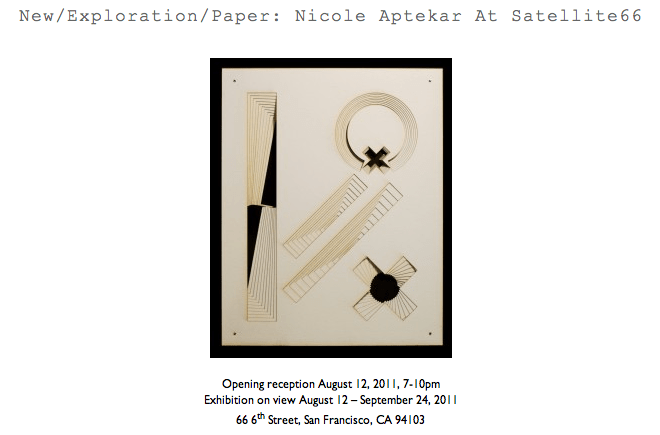
  • Today, I had the opportunity to look at Luca Nino Antonucci’s work from his current show, COLLAPSE, at the Wire + Nail Gallery (San Francisco, CA) showing until August 21, 2011. The content of the show is based on light from 13.5 billion years ago. Using advanced photographic technology, which includes an infrared camera along with a multi object spectrometer indicating distance, Antonucci creates an array of paper based work that illuminates (pun intended) what the human eye is unable to see, perhaps, even fathom. The show is accompanied by a book project created in collaboration with Daniel R. Small called “First Light” that explains, in laymen’s terms, the process behind the art. The show itself is a great example of what can be done with photography when an artist uses it to create something seemingly unimaginable and enigmatic. Yes, you have to think about the work and not just look. It begs the viewer to wonder, which is the beauty behind the work. Although the viewer is well aware of light’s inevitable demise, there’s an amorous and sentimental feeling gleaned from the work.

    My favorite pieces from COLLAPSE: The White Embossments of Star Clusters *sigh*

    Learn more about Luca’s work by visiting his website here.

  •  The Arts

    Go on…click on the Pearl for some awesomeness. You don’t even have to click your heels. I’ve already done that for you. 😉

  • In art the object is the work produced by art, as much containing elements of empirical reality as displacing, dissolving, and reconstructing them according to the work’s own law. Only through such transformation, and not through an ever falsifying photography, does art give empirical reality its due, the epiphany of its shrouded essence and the merited shudder in the face of it as in the face of a monstrosity. The primacy of the object is affirmed aesthetically only in the character of art as the unconscious writing of history, as anamnesis of the vanquished, of the repressed, and perhaps of what is possible. The primacy of the object, as the potential freedom from domination of what is, manifests itself in art as its freedom from objects. If art must grasp its content [Gehalt] in its other, this other is not to be imputed to it but falls to it solely in its own immanent nexus. Art negates the negativity in the primacy of the object, negates what is heteronmous and unreconciled in it, which art allows to emerge even through the semblance of the reconciliation of its works.

    ~Theodor Adorno, Sociologist, philosopher, and musicologist 

    *         *          *          *

    All the guiding you need to read this post…

    The italic = Theodor Adorno

    The bold = My interpretation (feel free to comment, debate, and question)

    *         *          *          *

    In art the object is the work produced by art, as much containing elements of empirical reality as displacing,

    Art making produces an object. Art is physical and entails use of the senses.

    dissolving, and reconstructing them according to the work’s own law. Only through such transformation, and not

    The art object changes over time and on its own accord. The object transforms but not within  

    through an ever falsifying photography, does art give empirical reality its due, the epiphany of its

    the some kind of altered image. The transformation of the art stems from experience and observation. 

    shrouded essence and the merited shudder in the face of it as in the face of a monstrosity. The primacy of the object is

    The revelation of meaning arises, often times, abruptly. Immediacy and comprehension of the object

    affirmed aesthetically only in the character of art as the unconscious writing of history, as anamnesis of the vanquished,

    is confirmed through its formal qualities (i.e., that which is observable) and revealing of history and culture.

    of the repressed, and perhaps of what is possible. The primacy of the object, as the potential freedom from domination

    Essentially, when the art object ceases to be a mere object but becomes an idea and the experience of it – 

    of what is, manifests itself in art as its freedom from objects. If art must grasp its content [Gehalt] in its other, this other

    an abstraction and fertile ground for discourse. Art as well as the art object are interconnected. The notion

    is not to be imputed to it but falls to it solely in its own immanent nexus. Art negates the negativity in the primacy of the

    of the ‘other’ in the arts is subjective. Overall, art presents opposites simultaneously (i.e., light and dark,  

    object, negates what is heteronmous and unreconciled in it, which art allows to emerge even through the semblance of

    heterogeneous/homogenous, desires and needs, constructs and deconstructs). Basically, art is

    the reconciliation of its works.

    fu*cking important. 🙂

    ¶¶¶¶¶

    ¶¶¶¶¶

    ¶¶¶¶¶

    ¶¶¶¶¶

  • In art the object is the work produced by art, as much containing elements of empirical reality as displacing, dissolving, and reconstructing them according to the work’s own law. Only through such transformation, and not through an ever falsifying photography, does art give empirical reality its due, the epiphany of its shrouded essence and the merited shudder in the face of it as in the face of a monstrosity. The primacy of the object is affirmed aesthetically only in the character of art as the unconscious writing of history, as anamnesis of the vanquished, of the repressed, and perhaps of what is possible. The primacy of the object, as the potential freedom from domination of what is, manifests itself in art as its freedom from objects. If art must grasp its content [Gehalt] in its other, this other is not to be imputed to it but falls to it solely in its own immanent nexus. Art negates the negativity in the primacy of the object, negates what is heteronmous and unreconciled in it, which art allows to emerge even through the semblance of the reconciliation of its works.

    ~Theodor Adorno, Sociologist, philosopher, and musicologist 

    *          *          *          *

    Reading a wide array of texts has been an integral part of my writing practice. I’ve written numerous posts on this topic so I won’t bother getting into it since I have a sneaky suspicion you know what I would say (e.g., developing a voice, dedication, staying motivated, yada yada yada la la la, etc.). So, I’ll try to dissect the text above…

    ¶¶¶¶¶

    ¶¶¶¶¶

    ¶¶¶¶¶

    ¶¶¶¶¶